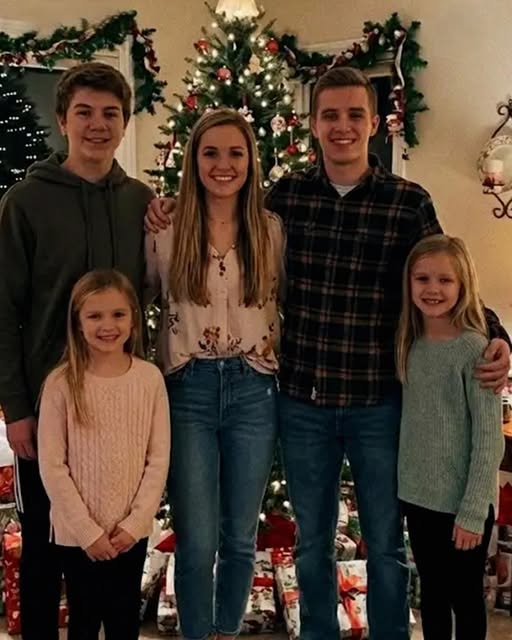
They built a life out of exhaustion—community college classes squeezed between construction shifts, waitressing jobs, and endless childcare. They lived on cold coffee and secondhand hope. The house was always noisy, always crowded, always held together by schedules taped to the fridge and sheer determination.
But it worked.
The younger kids stayed in school. Birthdays happened. Homework got done. Slowly, painfully, they built stability from chaos.
By twenty-four, the storm finally eased.
Degrees earned. Jobs secured. Bills paid on time. The house—once filled with grief—felt like a home again. Safe. Earned.
Then, on a quiet Saturday morning, the past showed up uninvited.
Their father stood on the porch.
Not with remorse. Not with regret.
With a demand.
He claimed the house was his. Said he planned to move in—with the woman he’d left them for. He spoke like the last five years hadn’t happened, like the children he abandoned were temporary occupants in his property.
Daniel exploded.
Anna stayed calm.
She told him to come back the next day.
That night, the kitchen table became mission control.
Anna remembered a conversation from years earlier—her mother, weak but clear-minded, whispering instructions. A lawyer’s name. A warning. A plan.
They pulled out every document they’d guarded since the funeral.
And there it was.
Updated deeds. A revised will. Guardianship filings. Every legal protection their mother could put in place before time ran out.
The next afternoon, their father returned—confident, smug, ready to reclaim what he thought was his.
Instead, he met a lawyer.
In minutes, the truth unraveled.
By abandoning the family and providing no support, he had forfeited his rights. The house legally belonged to the children. The will was airtight. His claim didn’t exist.
The confidence drained from his face.
For the first time, he had nothing to say.
He left without shouting. Without threats. Without a second chance.
And no one followed him.
The house stayed loud. Messy. Alive. Filled with siblings arguing over music and laughing over burned pancakes—just like before.
Weeks later, word traveled through relatives: the woman he left them for had moved on. He was alone. No house. No inheritance. No family waiting.
It wasn’t dramatic revenge.
Just consequence.
Anna and Daniel kept building. Kept showing up. Kept honoring the promise made in a hospital room years earlier.
Now, every time Anna unlocks the front door, the keys feel heavy—but not with burden.
With meaning.
Because karma doesn’t always strike like lightning. Sometimes it arrives quietly, in the form of truth:
Those who build on loyalty are sheltered.
Those who build on betrayal are left out in the cold.
And that house—still standing, still full—remains proof that love, sacrifice, and courage can outlast abandonment.
If this story moved you, share it with someone who believes second chances are earned—not owed. What would you have done in their place?