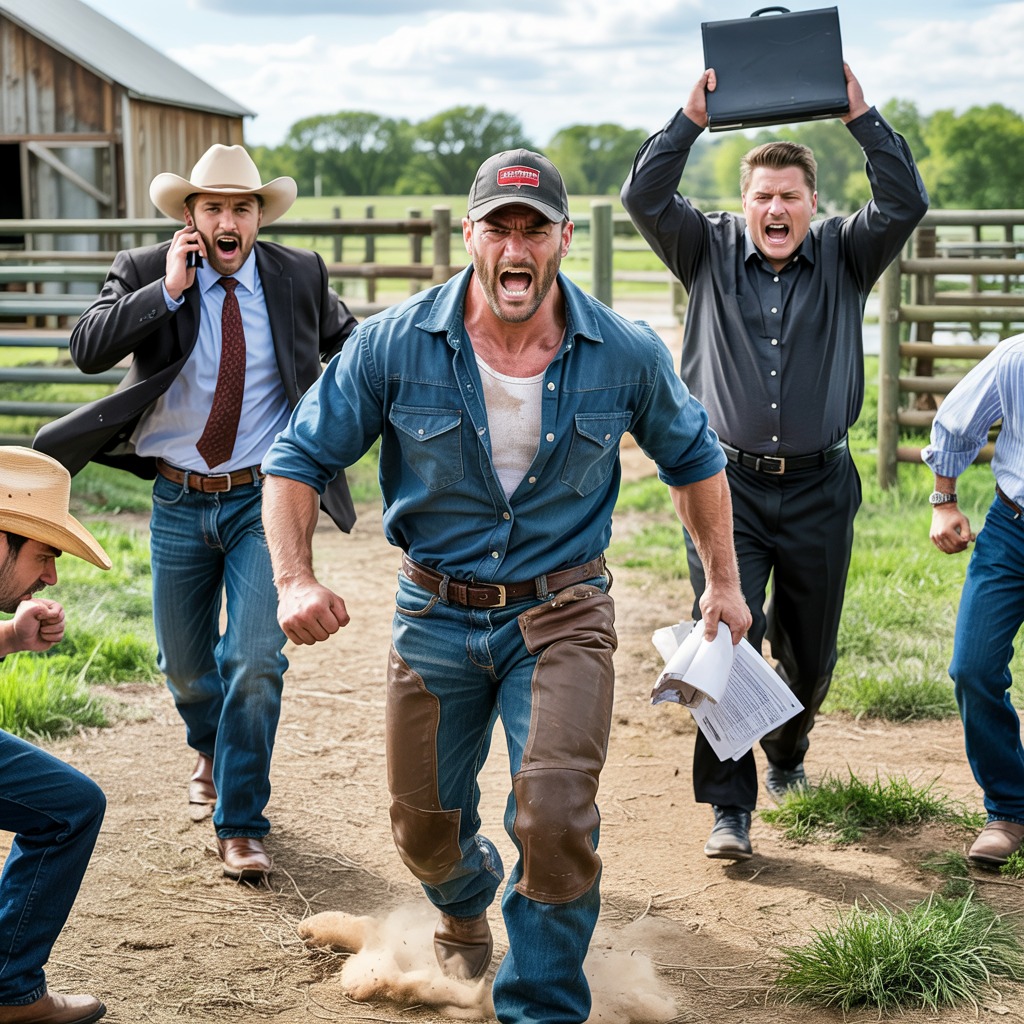
My name is Jack Holloway. I am the third generation to wake up on this dirt.
My grandfather broke this land with a mule, a plow, and a stubbornness that bordered on the divine. My father kept it alive through droughts that cracked the earth open like old porcelain and freezes that took half the herd in a single night. I pay my taxes. I mend my fences. I sleep lightly enough to hear a calf bawl two pastures over at three in the morning.
And now, according to a woman who moved here five years ago and still couldn’t tell a mesquite from a cedar, I had seventy-two hours to disappear.
“Seventy-two hours,” I muttered to the mesquite trees lining the drive.
Across the fence line, Judith sat in her idling golf cart, designer sunglasses perched on her nose, lips tight with anticipation. She wasn’t there by accident. She was watching. Waiting for me to unravel—maybe beg, maybe argue, maybe show the kind of weakness she could document and weaponize.
I didn’t give her the satisfaction.
I folded the notice once. Then again. Slid it into my back pocket and turned back toward the house. Judith revved her cart, irritated by the lack of drama.
On the porch, I set my coffee down and made a call.
“Triple it,” I told my attorney, my voice still gravelly with sleep. “Effective immediately.”
There was a long pause. I could hear papers shifting on his desk.
“Jack,” he said carefully, “you’re sure? We could start with a cease-and-desist. Drag it into mediation. Bleed them slow.”
“They gave me three days to leave my own heritage,” I replied, watching a hawk circle the south pasture. “Let’s see how they handle thirty days to pay up or pack out.”
Another pause. Then a quiet exhale.
“Alright,” he said. “Lease revision goes out today.”
Judith Harmon had no idea what she’d just done.
What she didn’t know—what her tailored blazers and performative authority hadn’t prepared her for—was that the ground she stood on was already mine. Months earlier, when rumors started circulating about “re-zoning opportunities” and “community land reclamation,” I’d moved quietly.
A holding company—Iron Creek Holdings LLC—had finalized the purchase of the five-acre parcel housing the clubhouse, pool, tennis courts, and the HOA’s precious office. My name never appeared. In Texas, silence is often the most dangerous sound of all.
Judith had declared war while standing on my floorboards.
Her campaign against me hadn’t started with the land—it started with control.
When she arrived from California, Pine Hollow was just a sleepy development trying to pretend it wasn’t surrounded by ranchland. Judith treated it like a failed startup begging for disruption.
First came the mailbox regulations. Then the grass. During a historic drought, she demanded an HOA-approved “harmonious green,” issuing fines while the reservoirs dried to dust.
When she reached my gate, she frowned like it offended her personally.
“It clashes with the aesthetic,” she said.
“The color is iron, Judith,” I told her. “It’s been that way since Eisenhower.”
She didn’t laugh.
What followed was a blizzard of citations—gate noncompliance, barn proximity violations, and the one that finally made me stop pretending this was ignorance instead of malice: a fine for “visible cattle trails” in the common buffer zone.
She wanted me to teach my herd not to walk like cattle.
When I heard she was combing county records, looking for leverage to seize my reserve land for a “community green space,” I stopped being neighborly and started being prepared.
The day the new lease dropped, Pine Hollow erupted.
By noon, the HOA Facebook group looked like a digital riot. Retirees panicked about dues. Parents demanded answers. By sundown, the truth had leaked: the HOA didn’t own its own heart anymore.
When I walked into the HOA office to hand-deliver the lease, Judith looked like she’d swallowed a live coal.
“This is extortion,” she hissed.
I leaned against the counter, calm as a fence post.
“No, Judith. This is a market correction. You wanted to play government—now you get to pay the taxes.”
That’s when things turned ugly.
My perimeter fence was cut the following night. Night-vision caught Brian, the HOA secretary—a man who once apologized to a mailbox for bumping into it—snipping wire like a criminal in borrowed skin. When I caught him, shaking and soaked in sweat, he sobbed that Judith told him to “send a message.”
Then came the firebomb. Crude. Panicked. Thrown through the clubhouse window like desperation wrapped in gasoline.
But the real reckoning came under fluorescent lights in the high school gym.
I rented the space and invited everyone.
I showed them the notice.
The deed transfer.
The bank statements.
While Judith fined neighbors for patio cushions, she had funneled fifteen thousand dollars into “J. Harmon Consulting.” No invoices. No services. Just theft dressed as leadership.
The room broke open.
A librarian named Lily stood and called for Judith’s removal. The vote was nearly unanimous. When the sheriff stepped forward with an arrest warrant, Judith’s face twisted—not in fear, but in hatred.
“My son won’t let this go,” she warned.
He tried.
Tyler Harmon set fire to my barn two weeks later. We saved the cattle. Lost the roof. He was caught before the embers cooled.
That was the end.
The triple rent stayed for one year. Not for revenge—penance. The money rebuilt trust: a shaded pavilion, drainage repairs, scholarships.
Tyler came to my porch months later, eyes hollow, pride burned away. He asked for work. I gave it to him.
Today, the ranch is quiet again. The cattle walk their trails. The clubhouse hums with transparency instead of fear.
I still drink my coffee on the porch every morning.
I learned you don’t need to shout to be heard.
You don’t need cruelty to be strong.
You just need to know where your fence line is—and be ready when someone tries to move it with a red-lettered lie.