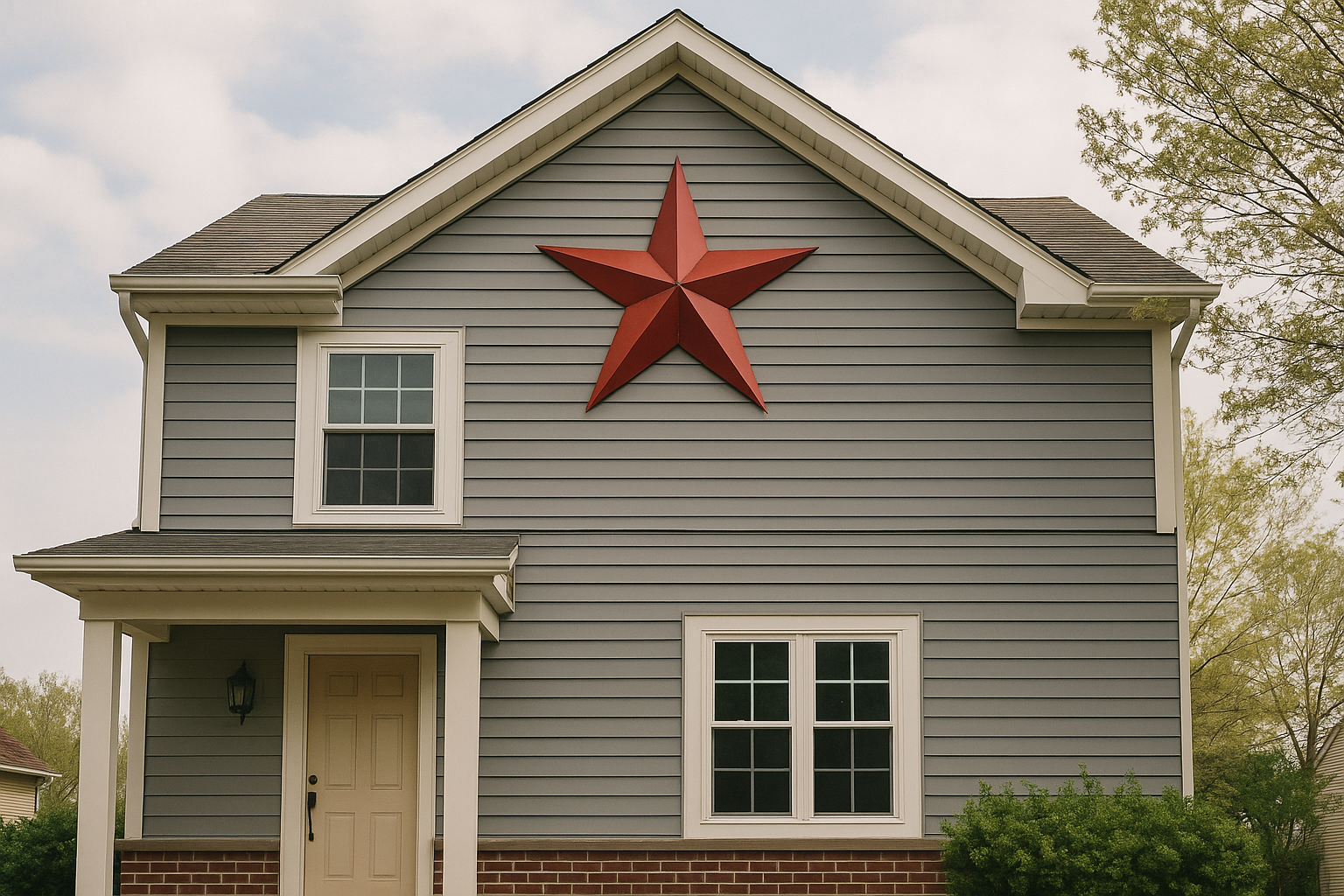
The Real Name: Barn Stars (Also Called Amish Barn Stars)
The star most people are talking about is commonly known as a barn star (sometimes called an Amish barn star). These are classic pieces of rustic home décor with deep roots in traditional American architecture, especially in areas influenced by the Pennsylvania Dutch.
Despite the name, “Pennsylvania Dutch” doesn’t mean Dutch in the modern sense. It comes from “Deutsch,” reflecting German heritage. Many families from German-speaking regions brought their craftsmanship, folk art, and symbolic traditions with them when they settled in the U.S.
Barn stars were often mounted on barns, farmhouses, and outbuildings across Pennsylvania and nearby states. They weren’t meant to be secret. They were designed to be seen—proudly displayed as part of the home.
What a Barn Star Traditionally Symbolizes
Ask around and you’ll hear a few variations, but the themes are consistent. Traditionally, barn stars have been linked to ideas like:
- Good luck and positive fortune
- Protection over the home and property
- Prosperity and stability
- Faith, hope, and blessings
- Pride in heritage and craftsmanship
In many cases, the meaning is simple: it’s a decorative symbol that reflects tradition, family history, and rural Americana.
Do the Colors Have Meanings?
Sometimes, people share folk interpretations of color—like a black star representing protection or a green star symbolizing growth. These ideas can be part of local tradition, but they are not a universal “code.” There’s no official chart, no standardized system, and no consistent rule across communities.
Most of the time, the color choice is personal—picked because it matches the home’s exterior, complements the barn, or fits a preferred style.
Why You See Them Everywhere Now
As farmhouse style and country-inspired home design became popular, barn stars spread far beyond rural areas. Today you’ll find them on:
- Suburban homes and garages
- Garden sheds and fences
- Porch walls and interior accent décor
- Mass-market home décor websites and stores
They’re widely sold because they’re a well-loved design element—not because they carry a secret message.
The “Secret Signal” Theory Doesn’t Hold Up
One of the simplest ways to evaluate a rumor is to ask: does it make practical sense?
If barn stars were truly a coded symbol for a private lifestyle, they wouldn’t be openly mass-produced and marketed as rustic décor. And there’s no credible evidence—historical or modern—that these stars have ever functioned as an invitation, identifier, or signal for anything sexual or social.
Also, it’s unrealistic to think any private community would rely on a permanent, highly visible symbol on the front of a home—something neighbors, delivery drivers, kids, and strangers could misread. Real-life private communication doesn’t work that way.
What This Story Really Shows About Online Misinformation
This rumor spread because it pushed emotional buttons: curiosity, awkwardness, and the thrill of “knowing something others don’t.” Social platforms often reward content that shocks people, not content that’s accurate.
But when false narratives attach themselves to ordinary symbols, they can turn harmless traditions into something needlessly controversial—especially for homeowners who simply liked the look or inherited the decoration with the house.
The Bottom Line: It’s Usually Just a Star
A five-pointed star on a house is most often a barn star—a traditional symbol tied to heritage, craftsmanship, and old-fashioned home pride. Not a secret code. Not an invitation. Just a familiar piece of Americana that has lasted for generations because people enjoy what it represents.
And honestly, the real story is more interesting than the rumor: it’s about how culture travels, how symbols endure, and how quickly the internet can rewrite meaning when people stop checking sources.
CTA: Have you seen a barn star in your neighborhood—or on your own home? Share where you’ve spotted them and what you were told they meant, and let’s compare notes in the comments.