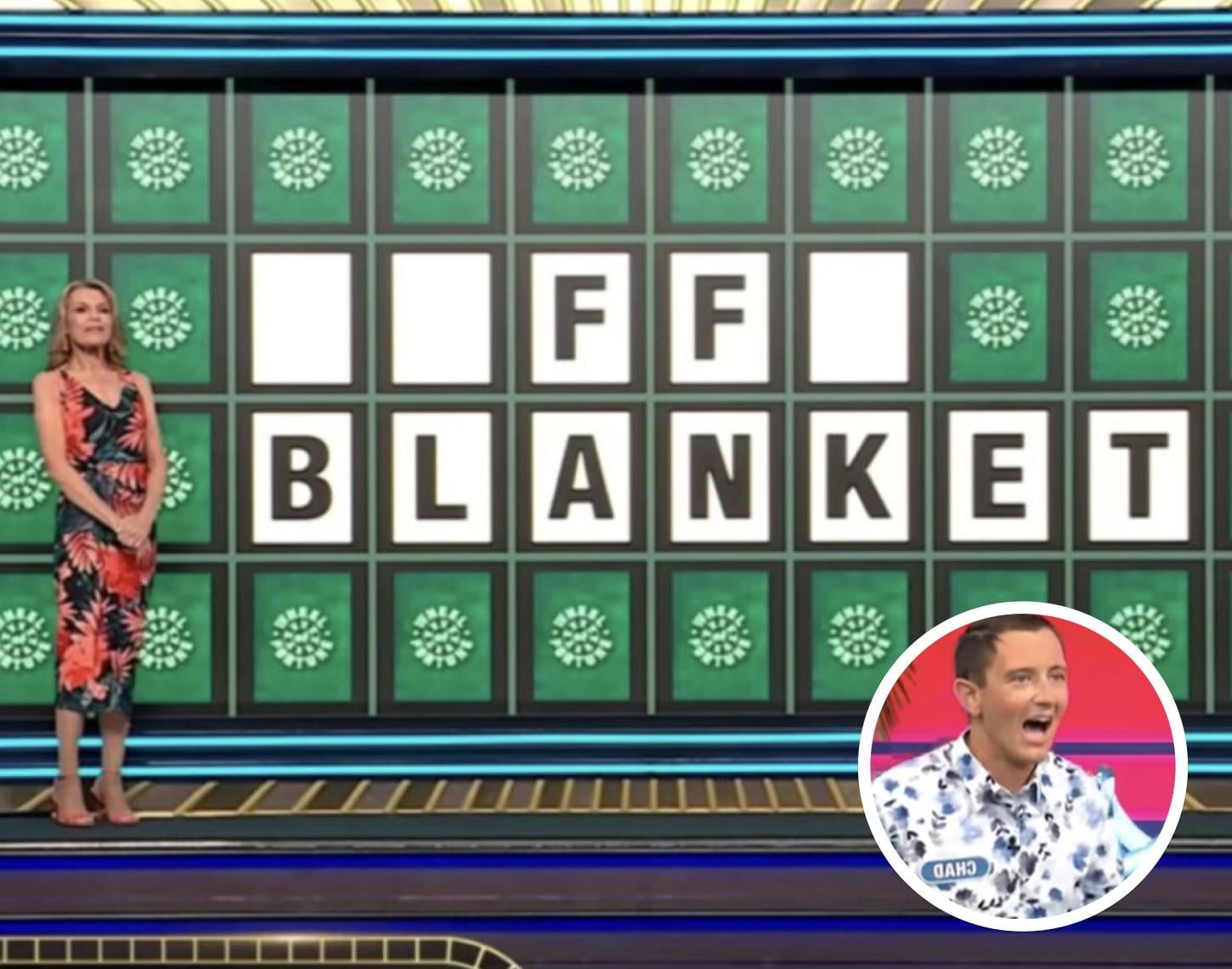
Television studios have a way of amplifying emotion, but during a recent episode of Wheel of Fortune, the spotlight captured something unforgettable. Chad Hedrick didn’t walk onto the stage like a seasoned game-show strategist or an overexcited fan chasing fame. Instead, he carried himself with the calm confidence of someone used to bright lights and live broadcasts. A local news reporter from Kentucky, Hedrick was no stranger to pressure, deadlines, or staying composed while the cameras roll.
Dressed sharply and wearing a practiced professional smile, he appeared steady and controlled as the game began. But by the end of the episode, that carefully maintained composure would completely dissolve — replaced by a raw, emotional reaction that quickly spread across the internet.
Hedrick’s journey through the game wasn’t smooth. Early rounds tested his resilience, as he landed on punishing wedges like “Bankrupt” and “Lose a Turn.” Momentum slipped away more than once, and the spinning wheel seemed unforgiving. To viewers, it looked like a solid but unremarkable performance. To Hedrick, it was a test of focus — one he approached with the same discipline he used covering breaking news.
Gradually, things shifted. He began solving puzzles with increasing precision, pulling victories from situations that looked nearly lost. By the end of the main game, his steady determination paid off, earning him a place in the high-stakes Bonus Round — where real money and real pressure collide.
Standing beside host Ryan Seacrest, the energy in the studio changed instantly. The playful tone disappeared, replaced by a tense silence. In the audience, Hedrick’s family watched anxiously as the puzzle category appeared. The board revealed only a handful of letters, offering little help and no obvious solution. It was the kind of Bonus Round puzzle that often ends without a winner.
As the ten-second clock began, Hedrick hesitated. His first attempts sounded uncertain, as if he were thinking out loud, testing phrases against the ticking timer. The seconds slipped away. Then, just before time ran out, clarity struck. With sudden confidence, he delivered the correct answer.
The studio erupted.
The audience burst into applause, releasing the tension that had built throughout the round. Even Ryan Seacrest appeared momentarily stunned. The puzzle had been exceptionally difficult — the type that typically sends contestants home with a polite smile and a smaller prize. Hedrick, however, had solved it at the last possible moment.
The surprise didn’t end there.
When Seacrest opened the prize envelope and revealed an additional $55,000, bringing Hedrick’s total winnings to $74,000 in cash, the moment became truly unforgettable. The seasoned reporter lost all restraint. In pure disbelief, he gave Seacrest a light, shocked shove, laughed uncontrollably, and nearly buckled at the knees.
“You’re joking,” he repeated, his voice breaking. “You’re joking.”
For a man whose career revolved around finding the right words, Hedrick was suddenly speechless. In that instant, he wasn’t a journalist or a contestant — he was simply someone processing a life-changing financial win in real time.
Clips of the moment spread rapidly across social media. Viewers replayed the stunned reaction, the joyful disbelief, and the now-viral “Seacrest shove.” Fans praised the authenticity of the moment, calling it one of the most genuine reactions ever seen on a TV game show. In an era of heavily produced entertainment, Hedrick’s reaction stood out as refreshingly real.
The episode quickly earned its place in Wheel of Fortune history — not just because of the impressive dollar amount, but because of the emotional payoff. Hedrick’s transformation from composed reporter to viral sensation reminded audiences why game shows still matter. They aren’t just about puzzles or prizes; they’re about witnessing ordinary people experience extraordinary moments.
That night, Chad Hedrick walked off the stage with more than a substantial cash prize. He left with a moment that millions would remember — proof that sometimes, the most powerful stories aren’t reported from behind the camera, but lived right in front of it.