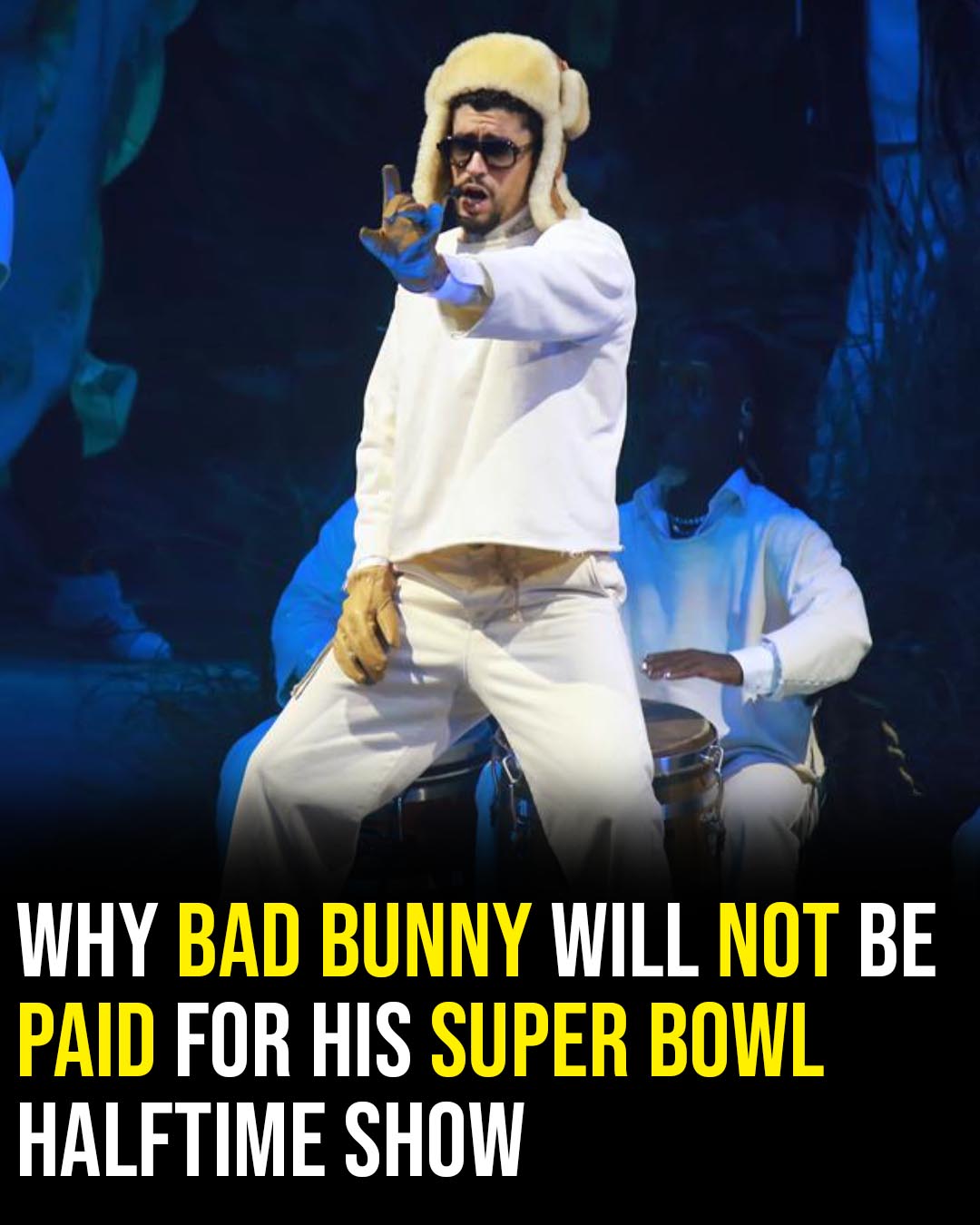
Bad Bunny’s upcoming Super Bowl halftime performance has become one of the most talked-about moments in entertainment news. While fans are eagerly anticipating the show, many are surprised to learn that the global music star will not be earning a traditional performance fee for taking the stage.
The Puerto Rican-American artist has been selected as the halftime headliner for Super Bowl LX, set to take place in California this weekend. Given the massive scale of the event and the billions of dollars it generates through advertising, sponsorships, and broadcasting rights, it may seem unusual that the featured performer is not paid.
Yet this arrangement is not unique to Bad Bunny.
Despite being one of the most streamed artists in the world, Bad Bunny—born Benito Antonio Martínez Ocasio—will not receive a standard appearance fee. In fact, this is a long-standing NFL policy that applies to all main halftime performers.
Bad Bunny is also making history as the first Spanish-speaking artist to headline the Super Bowl halftime show. Millions of viewers across North America and around the world are expected to tune in to watch the live performance.
Although the exposure is massive, the NFL does not compensate halftime headliners in the way artists are typically paid for concerts or private events. Performers usually command multi-million-dollar fees, but they agree to waive those payments for the Super Bowl.
Instead, the league provides a small union-mandated payment and covers all production expenses, which can reportedly reach up to $10 million. These costs include staging, lighting, sound, and technical production—expenses that would normally fall on the artist.
The real value, however, lies in the unmatched global exposure. Performing at the Super Bowl halftime show places an artist in front of one of the largest television audiences of the year, often leading to spikes in streaming numbers, album sales, merchandise revenue, and long-term brand growth.
For many artists, including Bad Bunny, the promotional impact of the performance is considered far more valuable than a direct paycheck.
The singer has also made headlines for reasons beyond music, including criticism from public figures such as former President Donald Trump, who has previously stated he is not a fan. Still, the selection underscores Bad Bunny’s cultural influence and commercial success.
The NFL’s halftime policy has sparked debate over the years, raising questions about whether performers should be paid outright or whether exposure alone is sufficient compensation.
What do you think about the NFL’s rule regarding halftime performers? Will you be tuning in for the Super Bowl—and Bad Bunny’s highly anticipated performance? Share your thoughts in the comments.