
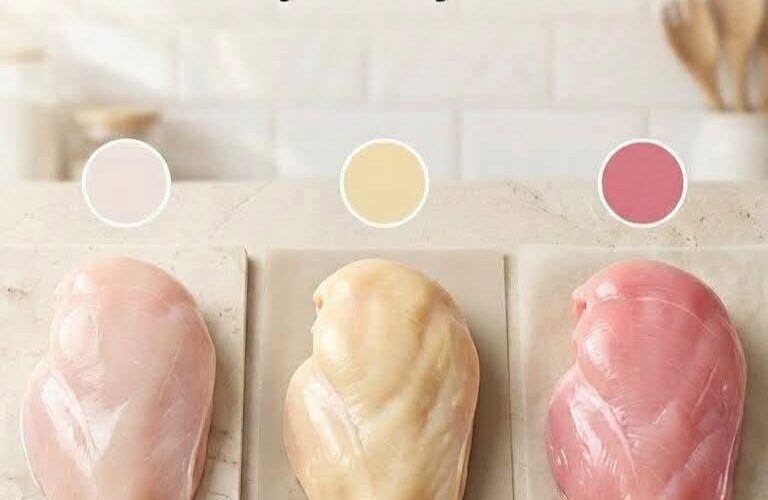

Why Does Chicken Have Different Colors?
Fresh chicken can naturally vary in appearance.
Factors such as the bird’s age, muscle activity, packaging, exposure to oxygen, and storage conditions can all affect how the meat looks.
For example, chicken exposed to air may appear brighter or redder because of changes involving pigments in the muscle. Meat stored in packaging with limited oxygen can sometimes look darker or purplish.
These changes don’t automatically mean that the chicken has spoiled.
Pink Doesn’t Always Mean Fresh
A common misconception is that the pinkest chicken is automatically the freshest.
That’s not necessarily true.
Color is influenced by several factors, so judging freshness from appearance alone can be misleading. A better approach is to consider the use-by date, storage conditions, packaging, and overall condition of the product.
What Should You Look For Instead?
When purchasing chicken, check whether the packaging is intact and whether the product has been kept properly refrigerated.
You should also pay attention to unusual characteristics such as:
- A strong or unpleasant odor
- Sticky or unusually slimy texture
- Damaged or leaking packaging
- Meat that has been stored beyond the recommended date
- Signs that the chicken may have been left at an unsafe temperature
One characteristic by itself may not tell the whole story, so it’s important to consider the product as a whole.
What About Yellow Chicken?
You may also notice chicken with a slightly yellowish appearance.
This can sometimes be related to the bird’s diet or natural differences between chickens. It does not automatically mean the meat is either better or worse.
In other words, chicken color is not a simple quality score.
The Most Important Factor Is Safe Handling
Regardless of its color, raw chicken should be handled carefully.
Keep it refrigerated, avoid cross-contamination with foods that will be eaten raw, wash your hands and utensils after handling it, and cook chicken thoroughly to a safe internal temperature.
Food safety practices are much more important than trying to judge quality from color alone.
The Bottom Line
The next time you see chicken that looks slightly different from what you’re used to, don’t immediately assume that the color tells you everything.
Chicken can naturally vary in appearance, and changes in color can happen for several reasons.
Color can provide a clue about the meat, but it shouldn’t be treated as a reliable test of freshness or safety.
When in doubt, check the date, storage conditions, packaging, and other signs of spoilage—and follow proper food-safety guidance.