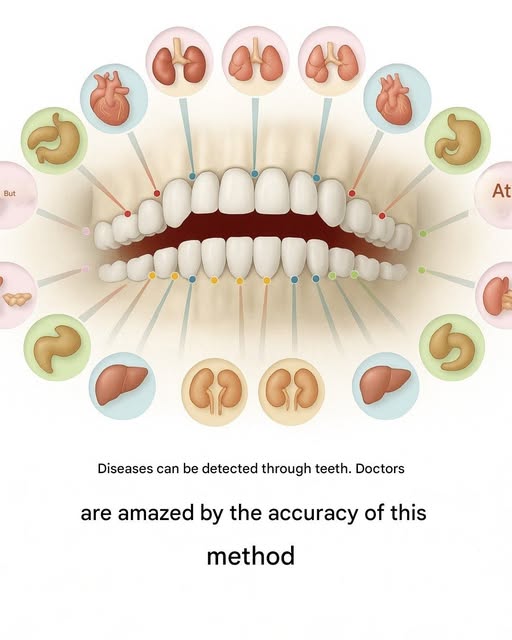
Tooth pain is something nearly everyone recognizes instantly: a sudden, sharp discomfort in a specific spot that usually sends us straight to the dentist to check for a cavity, a cracked tooth, or an infection. Yet in holistic health philosophies and ancient medical systems, the mouth is not seen as a standalone mechanical unit. Instead, it is considered a highly informative indicator of the body’s overall condition. From this viewpoint, teeth are not merely tools for chewing, but sensitive markers that mirror the state of our internal organs. The concept known as the “dental meridian” theory proposes that every tooth is energetically linked to a particular organ or bodily system through meridian pathways. As a result, ongoing pain in a tooth that appears healthy on X-rays may actually be a signal pointing to imbalance in organs such as the kidneys, liver, or heart.
This idea is rooted in the belief that the body functions like an interconnected network, where energy channels act as communication lines between distant regions. When an internal organ becomes strained or disrupted, that imbalance may surface as pain, pressure, or sensitivity in its corresponding tooth. The dental meridian framework offers a way to interpret oral discomfort as more than a local problem, encouraging a broader view of health. By grouping teeth according to their energetic associations, this model attempts to translate dental pain into early warnings of systemic issues—sometimes before more serious symptoms appear.
The dental map typically begins with the incisors, the front teeth in both the upper and lower jaw. These teeth are commonly associated with the kidneys and the urinary system. When unexplained sensitivity or recurring aches affect the incisors, holistic practitioners suggest looking beyond dental causes and considering urinary or renal imbalance. Such discomfort may precede conditions like bladder inflammation, chronic kidney strain, or even middle ear problems. Since the kidneys play a critical role in detoxification and fluid regulation, discomfort in the front teeth may be a cue to reassess hydration, stress levels, and kidney health.
Just behind the incisors are the canines, often called eye teeth due to their shape and position. These teeth are believed to correspond to the liver and gallbladder—organs responsible for detoxification, digestion, and metabolic balance. Tenderness or pain in the canines is sometimes viewed as a sign of liver overload or gallbladder stagnation. In holistic interpretations, persistent discomfort in these teeth may hint at early liver stress or gallbladder inflammation. Because emotional tension and toxin buildup can burden the liver, the canines are thought to act as early messengers signaling the need for lifestyle or dietary adjustments.
Next along the jaw are the premolars, which are linked energetically to the lungs and the large intestine. Sensitivity in these teeth—especially in the lower jaw—may coincide with respiratory or digestive challenges. People experiencing asthma, chronic bronchitis, sinus congestion, or recurring nasal irritation often report increased premolar discomfort during flare-ups. Similarly, issues in the colon, such as irregular digestion or inflammation, may also be reflected here. This association underscores the connection between breathing, elimination, and overall vitality, suggesting that premolar pain may indicate the need to support both respiratory function and gut health.
The molars, designed for grinding food, are associated with some of the body’s most essential systems. These teeth are linked to the stomach, pancreas, spleen, and even the joints. Pain in the upper molars is often connected to digestive disturbances such as acid imbalance, stomach inflammation, or nutrient absorption issues. Lower molar discomfort, on the other hand, may correspond with joint problems, intestinal inflammation, or circulatory concerns. In holistic interpretations, molar pain may also be accompanied by fatigue or low energy, reflecting stress on the body’s core systems responsible for digestion and energy production.
Finally, the wisdom teeth—also known as third molars—are associated with the heart, small intestine, and nervous system. Because they are the last teeth to emerge and are positioned deep within the jaw, they are often linked to overall energetic balance and emotional load. Discomfort or impaction in wisdom teeth is sometimes interpreted as a reflection of cardiovascular strain, nervous tension, or difficulty processing emotional experiences. Since the small intestine governs nutrient assimilation, wisdom tooth issues may symbolize challenges in absorbing not only nutrients, but also life experiences.
While conventional dentistry primarily focuses on physical structures and mechanical causes, holistic perspectives invite a more integrated understanding of dental pain. Some theories even suggest that discomfort can persist in the area of a removed tooth, implying that energetic connections remain active despite physical absence. This idea supports the notion that the body’s communication pathways extend beyond anatomy alone.
Viewing dental health through this broader lens encourages greater body awareness. A toothache, rather than being just an irritation to suppress, may serve as a subtle alert from deeper within the body. Although this approach does not replace professional dental care, it complements it by emphasizing prevention and whole-body awareness. In this integrated model of health, each tooth offers insight into internal balance, guiding us toward early intervention, deeper healing, and long-term well-being—protecting both our smiles and the systems that sustain us.