 Curious & Viral
Everyone Was Sharing This ICU Rescue Clip—Then the Reality Behind It Was Revealed
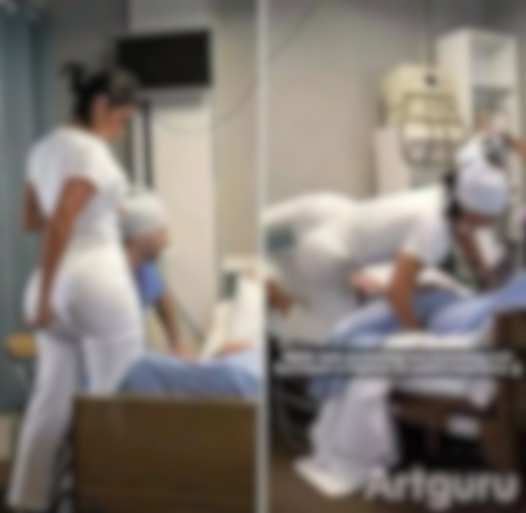
A dramatic hospital video recently attracted attention online after appearing to show a nurse responding to an unconscious patient in an intensive-care setting.
The scene looked convincing: medical equipment surrounded the patient, monitors appeared to be active, and the healthcare worker moved with the urgency viewers might expect during a serious emergency.
But there was an important detail many viewers initially missed.
The clip was not necessarily evidence of a real-life emergency unfolding in a hospital.
Instead, the video appears to have been created to look like a medical rescue scene, raising questions about how easily staged or simulated footage can be mistaken for genuine events online.
Why the Video Looked So Convincing
The setting played a major role in creating the impression of authenticity.
An ICU-style environment, medical equipment, hospital clothing, and urgent movements can make a short video feel remarkably realistic, even when viewers have little information about where or why it was recorded.
Short-form videos also provide very little context.
A clip may be reposted without its original caption, description, or explanation. Once that happens, viewers can interpret the same footage very differently from the way it was originally intended.
The Moment That Got People Talking
In the footage, the nurse appears to respond to a patient who is lying motionless.
Some movements resemble emergency chest compressions, which led viewers to assume that a genuine resuscitation attempt was taking place.
Others questioned the scene and wondered whether the actions were part of a demonstration, training exercise, production, or staged performance.
Without reliable information about the video’s origin, however, it is difficult to determine exactly what was happening simply by watching the clip.
Why Medical-Looking Videos Can Be Misleading
A realistic setting does not automatically prove that an event is real.
Medical simulations are commonly designed to reproduce stressful situations so that healthcare professionals can practice responding to emergencies. Training environments can include realistic equipment, mannequins, monitors, uniforms, and carefully choreographed actions.
 Up Next: Page 2 of 2
Entertainment productions can also recreate hospital emergencies using similar visual details.
That means viewers should be cautious before assuming that every dramatic hospital video represents an actual patient emergency.
Continue Reading