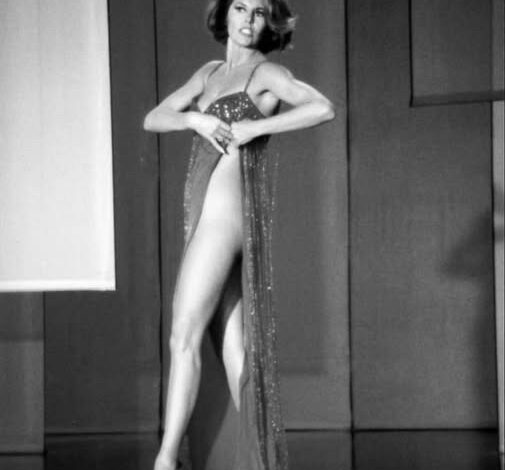
During Hollywood’s classic studio era, few performers embodied elegance and discipline as completely as Cyd Charisse. Known for her striking presence, exceptional dance ability, and refined screen persona, Charisse became one of MGM’s most respected musical stars. Behind the glamour, however, her path to success began with an unexpected challenge far from the spotlight.
Born Tula Ellice Finklea in Amarillo, Texas, in 1922, Charisse faced serious health difficulties early in life. As a young child, she contracted polio at a time when effective vaccines were not yet available. The illness weakened her physically and required extensive rehabilitation. Doctors recommended ballet lessons as a form of physical therapy, hoping the structured movement would help her regain strength and mobility.
What began as a medical necessity soon became a defining passion. Ballet not only helped restore her physical health but also provided discipline, confidence, and direction. Through years of focused training, she transformed her early limitations into a foundation for extraordinary physical control and artistic expression.
As a teenager, she moved to Los Angeles to study under highly regarded ballet instructors, including Russian-trained teachers who emphasized classical technique. Early in her career, she performed under various stage names before settling on “Cyd,” a nickname derived from her brother’s childhood pronunciation of “Sis.”
Charisse’s talent eventually caught the attention of Hollywood studios, and she signed with MGM in the 1940s. She worked steadily in ensemble roles before gaining wider recognition in the early 1950s. Her appearance in the “Broadway Melody” sequence of Singin’ in the Rain (1952) marked a turning point, showcasing her ability to convey emotion and narrative through movement alone.
She went on to become one of the few dancers to partner successfully with both Gene Kelly and Fred Astaire, adapting seamlessly to their distinct styles. Her performances in films such as The Band Wagon (1953), Brigadoon (1954), and Silk Stockings (1957) helped define the sophistication of Hollywood musicals during their peak years.
Beyond her technical skill, Charisse was admired for her professionalism and composure. Off screen, she led a relatively private life and was married for six decades to singer Tony Martin, with whom she raised a family. Colleagues often described her as disciplined, reserved, and deeply committed to her craft.
Later in life, she stepped back from regular screen work but continued to influence the arts through teaching and mentorship. In 2006, her contributions were formally recognized when she received the National Medal of Arts, one of the highest honors awarded to artists in the United States.
Cyd Charisse passed away in 2008 at the age of 86, leaving behind a lasting legacy in film and dance. Her story remains a powerful example of how perseverance, training, and resilience can transform early adversity into enduring artistic achievement.