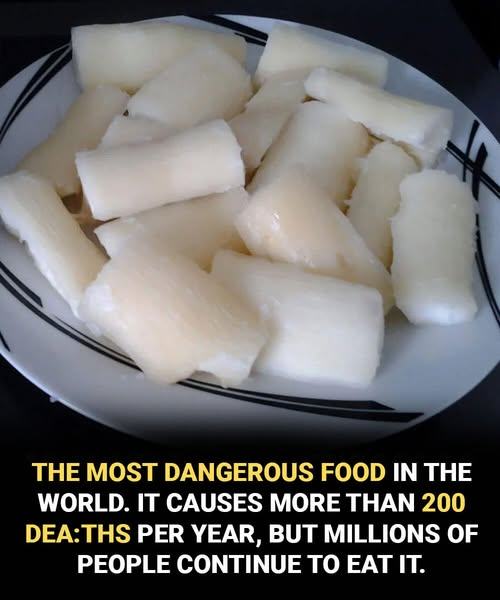
Cassava is one of the most heavily consumed staple foods on the planet — a root that feeds entire regions, anchors cultural dishes, and thrives in soils where almost nothing else will grow. Yet buried inside this familiar ingredient is a danger most casual consumers never think about. Prepared correctly, it’s nourishing, dependable, and endlessly adaptable. Prepared poorly, it can release enough cyanide to poison a family, a village, or, in extreme situations, an entire generation. The contradiction is striking: a food that keeps millions alive can also quietly harm them if the steps that make it safe are ignored.
The risk isn’t obvious at first glance. Cassava looks like an ordinary tuber — rough skin, starchy flesh, mild in flavor. But inside certain varieties, especially the “bitter” strains, are high levels of cyanogenic compounds. These chemicals sit dormant until the plant is damaged. Grating, slicing, even chewing triggers an enzymatic reaction that liberates cyanide. In small amounts, the body can neutralize it. In larger concentrations, cyanide becomes the same toxin associated with assassins and survival thrillers. For most people in industrialized countries, cassava arrives already processed into flour, tapioca pearls, or packaged chips. But in regions where fresh cassava is harvested and cooked daily, the responsibility for making it safe falls entirely on the household.
Poisonings typically occur not because people don’t understand the danger, but because conditions force them to cut corners. Cassava requires time, water, firewood, and attention — resources that can disappear during drought, conflict, or poverty. Families struggling through famine often harvest roots too young, skip soaking or fermentation, or reduce cooking time to conserve fuel. Emergency shortcuts have consequences. Cyanide that should have leached out stays inside the food. Over time, repeated exposure can overwhelm the body’s detox systems, especially in children and people whose diets lack protein. Protein contains sulfur-based amino acids that help neutralize cyanide; without them, the toxin lingers longer in the bloodstream.
Continue reading next page…