 Home & Living
I Found a Strange, Foul-Smelling Growth in My Yard—Then I Learned What It Was
After a night of heavy rain, I stepped outside early one morning to check on the flowers and garden.
Everything looked normal at first.
Then I noticed the smell.
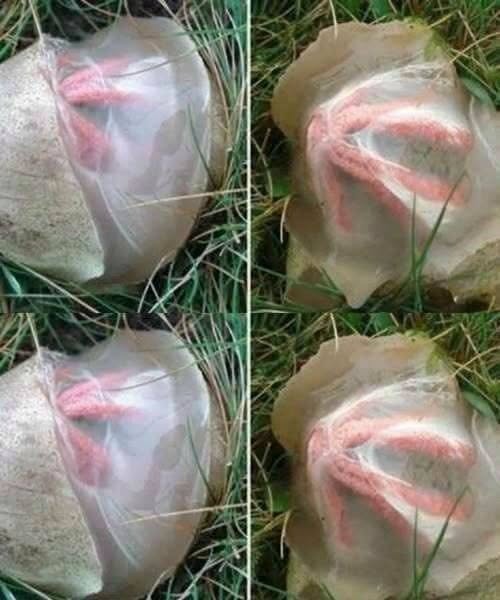
A powerful, unpleasant odor was coming from one of the flowerbeds. When I walked closer, I spotted something that immediately caught my attention.
It was a strange, pale growth with a soft, unusual appearance and reddish structures emerging from the center.
I had never seen anything quite like it.
My First Thought Was Completely Wrong
For a moment, my imagination took over.
Could it be the remains of an animal?
Some kind of insect infestation?
Or perhaps something I had never encountered before?
I decided not to touch it. Instead, I took a few photographs and started searching for possible explanations.
The more I looked at pictures of unusual garden growths, the more curious I became.
Then I finally found an image that looked remarkably similar.
It was a stinkhorn fungus.
The Strange Fungus With a Powerful Smell
Stinkhorns are a group of fungi known for their unusual shapes and distinctive odor.
Some species begin developing inside structures that resemble small eggs. As the fungus matures, a stalk or other structure emerges and releases a strong smell.
That odor serves an important purpose.
The unpleasant scent can attract flies and other insects. As the insects visit the fungus, they can pick up spores and help disperse them to other locations.
What smells terrible to us can therefore be part of the fungus's natural reproductive process.
 Up Next: Page 2 of 2
Why Did It Appear in the Garden?
Stinkhorns often appear in environments containing organic material, such as mulch, compost, decaying wood, or rich soil.
Continue Reading