Why the Cluster Looked So Unusual
Earthworms are generally seen individually or scattered across a damp surface.
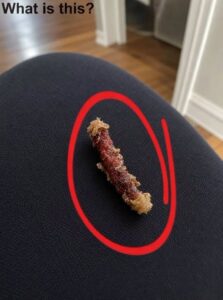
When many gather in a small area, their movements can overlap. One worm may crawl over another while nearby animals change direction, making the entire cluster appear to ripple.
The result can look surprisingly coordinated, even though each worm is moving independently.
Lighting, wet pavement, and the angle from which the cluster is viewed can make the effect even stranger.
Something that initially appears mysterious may turn out to be a natural behavior observed from an unusual perspective.
What Should You Do If You See Something Similar?
If you notice a large cluster of worms in your garden or yard after rain, there is usually no need to panic.
Earthworms are a normal part of many soil ecosystems. They help break down organic matter and contribute to soil structure.
It's best to observe them without disturbing the group. If the animals are on a frequently used walkway, you can give them space and allow them to move naturally.
If you encounter an unfamiliar animal or formation and cannot confidently identify it, avoid touching it until you know what it is.
An Ordinary Morning I Didn't Expect to Remember
The strangest part of the experience was how quickly an everyday routine changed.
I had stepped outside thinking about coffee and the plans for the day. Within seconds, I was standing still, studying something I couldn't immediately explain.
Once I understood what I was probably seeing, the scene became less mysterious—but no less fascinating.
Nature has a way of producing moments that seem almost unbelievable when we encounter them unexpectedly.
Sometimes, the most startling sight in your own backyard isn't something dangerous or extraordinary. It's an ordinary part of nature behaving in a way you've never noticed before.
 Read Next Story →
I Woke Up in the Middle of the Night Convinced Something Was Biting My Skin—and the Truth Was Hilariously Embarrassing
More Stories You May Like
See More →


Odette is the one who sees a headline about an unusual wildlife report at 7am and has 900 words on it by lunch. She's a generalist in the best sense: endlessly curious, fast, and allergic to dull writing.
More from Odette →