The Science of Temporary Blindness
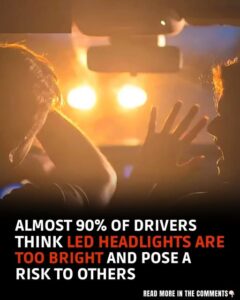
This isn’t about being overly sensitive—it’s about biology. When the eyes are hit with an intense light source at night, the retina becomes saturated, causing what’s known as “flash blindness.” Vision doesn’t just dim; it temporarily shuts down.
At highway speeds, a car travels nearly 100 feet per second. If a driver loses clear vision for four seconds, they cover the length of a football field without reliably seeing lane lines, hazards, or people. Research shows this exposure reduces contrast perception, making it extremely difficult to notice a pedestrian in dark clothing or a disabled vehicle ahead. Older drivers, or those with early cataracts, may take twice as long to recover, turning a brief glare into a prolonged danger.
Outdated Rules in a New Era
While lighting technology has advanced rapidly, regulations in many countries remain rooted in the halogen age. Standards set by agencies like the U.S. NHTSA or Europe’s ECE were built for softer, more diffuse bulbs.
Some newer vehicles now feature adaptive headlights that selectively dim portions of the beam to avoid blinding others. But these systems are expensive and mostly reserved for high-end models. In the meantime, millions of drivers are stuck in a lighting “arms race,” where manufacturers maximize visibility for their own customers at the expense of everyone else.
The problem is made worse by the aftermarket. “Plug-and-play” LED and HID kits allow drivers to install powerful bulbs in housings never designed for them. The result is scattered, uncontrolled light that often exceeds glare limits, yet rarely draws enforcement during routine traffic stops.
 Up Next: Page 3 of 3
The Hidden Cost
The impact extends beyond collision risk. Repeated exposure to blinding light creates what researchers call “glare anxiety.” Many people—especially older drivers—become so...
Continue Reading