A casual internet puzzle doesn't provide that kind of standardized measurement.
Finding five visual differences is much more dependent on selective attention and visual comparison.
So the statement that only someone with an IQ of 140 can solve such a puzzle is best understood as a playful challenge or marketing claim—not a scientific assessment.
Why Smart People Can Still Miss Obvious Differences
This is one of the most interesting parts of the puzzle.
You can be highly educated, an excellent problem-solver and very intelligent—and still stare directly at a difference without noticing it.
Why?
Because seeing something and consciously noticing it are not the same thing.
Your brain constantly filters information.
If you had to consciously process every detail in your visual environment, everyday life would become overwhelming.
Instead, your brain identifies familiar patterns and concentrates attention where it seems most useful.
That efficiency can work against you in a spot-the-difference puzzle.
Your Brain Often Assumes the Images Are the Same
When two pictures are almost identical, your brain quickly establishes a general impression of the scene.
It recognizes the overall arrangement.
The furniture looks the same.
The people look the same.
The background looks the same.
Once that general pattern has been established, your brain may stop carefully examining every individual detail.
That's where the puzzle gets you.
You're no longer comparing everything equally.
You're comparing what your brain expects to be there with what it actually sees.
Change Blindness Makes the Challenge Harder
Researchers have documented a phenomenon known as change blindness—the failure to notice changes in a visual scene when attention isn't directed toward the changed element.
The change doesn't necessarily have to be extremely small.
If your attention is elsewhere, you can overlook surprisingly noticeable alterations.
Spot-the-difference puzzles exploit this natural limitation.
Your eyes may pass over the changed area repeatedly, but your attention doesn't necessarily register it.
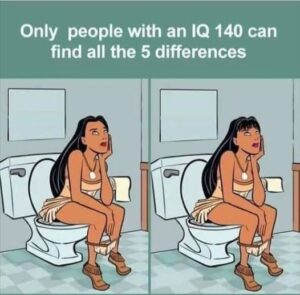 Up Next: Page 3 of 5
The Most Common Tricks in These Puzzles
Once you understand how puzzle creators think, some differences become easier to anticipate.
Continue Reading