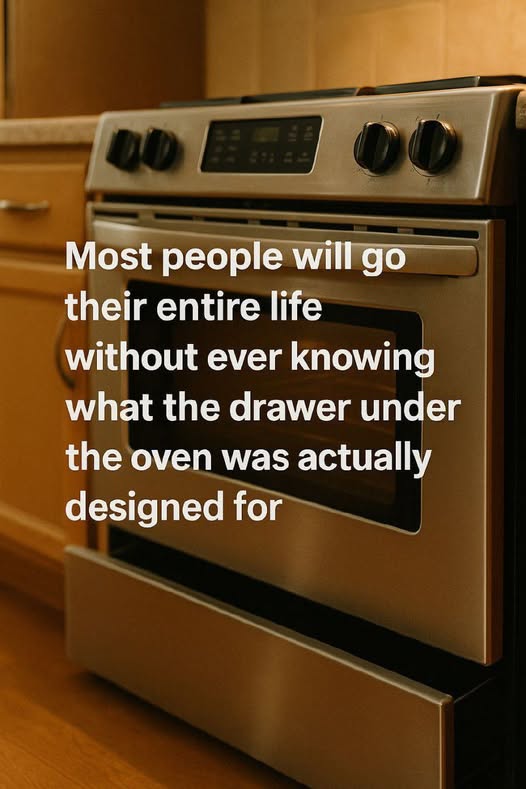
The kitchen is often called the heart of the home—a space where meals come to life, conversations unfold, and daily routines take shape. While homeowners tend to focus on appliances, countertops, and cabinets, one small feature is frequently overlooked: the drawer beneath the oven.
Most people use this drawer without a second thought. It commonly becomes a home for baking trays, frying pans, and bulky cookware that does not fit elsewhere. Over time, this habit has made many assume that the drawer was always meant for storage. In reality, its original purpose tells a different story.
In many older gas and electric ovens, the lower drawer was designed as a warming compartment, not a storage bin. Manufacturers introduced it to solve a practical problem—how to keep cooked food warm without overcooking it while other dishes finished or guests arrived.
Unlike the main oven, which operates at high temperatures, a warming drawer provides gentle, controlled heat, usually between 140°F and 200°F. This range is ideal for holding food safely while preserving texture, moisture, and flavor. Instead of drying out or continuing to cook, dishes remain ready to serve.
This feature was especially useful during large meals, holidays, and multi-course dinners. It allowed cooks to manage timing more easily and reduced stress in the kitchen.
Over time, appliance designs changed. Some modern ovens include drawers meant strictly for storage, while others still offer true warming functionality. Because both types often look identical from the outside, confusion became widespread.
The difference lies inside. A real warming drawer contains heating elements and insulation, sometimes with temperature controls on the oven panel. Storage drawers have none of these components. The most reliable way to tell which you have is by checking the user manual or the manufacturer’s website using the model number.
Using a warming drawer as storage can be risky. Even when not actively set, heat from the oven above can raise the temperature inside. This can damage cookware, warp baking sheets, or create a fire hazard if flammable items are stored there.
When used properly, warming drawers offer valuable benefits. They can keep side dishes warm, heat plates before serving, preserve freshly baked bread, and even provide an ideal environment for proofing dough. These small advantages can make a noticeable difference in meal preparation and presentation.
The misunderstanding surrounding oven drawers reflects a broader issue in modern homes: many appliance features go unused simply because their purpose is unclear. Taking time to understand how these tools work improves safety, efficiency, and everyday convenience.
That unassuming drawer beneath the oven is more than a storage space—it is a thoughtfully designed feature meant to simplify cooking. Recognizing its true function can turn a forgotten compartment into one of the most quietly useful parts of the kitchen.