That meant it wasn't discovered in some remote wilderness area. It was close to where people lived, walked, gardened, and spent time outdoors.
The fact that the snake had already captured a sizable wild animal demonstrated that it was capable of surviving outside captivity.
And that is one of the concerns surrounding exotic animals that are released or escape into environments where they don't naturally belong.
An animal doesn't have to be intentionally released to become a problem.
A door can be left open.
A cage can fail.
A snake can escape during transportation.
And once a large predator gets outside, it may find shelter and food surprisingly quickly.
Burmese Pythons Are Built for This
Burmese pythons are among the largest snakes in the world.
They are powerful constrictors, meaning they capture prey with their bodies rather than relying on venom.
They are also remarkably capable hunters.
A python can wait quietly for an opportunity before striking, wrapping its body around prey and eventually swallowing the animal whole.
Their flexible jaws and expandable bodies allow them to consume meals that look impossibly large compared with the snake's head.
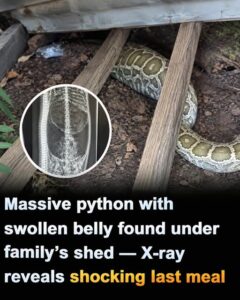
That's why the swollen belly seen on the New Jersey python was such an important clue.
The snake had recently eaten—and the X-ray provided the evidence.
The Animal Was Eventually Moved to Safety
After being examined and cared for, the python was placed in a secure enclosure and transferred to a licensed reptile expert.
That outcome was important for both the snake and the surrounding community.
A large exotic animal shouldn't be left to fend for itself in a suburban neighborhood, especially in a climate very different from its native range.
At the same time, the animal itself wasn't responsible for being there.
If a pet escapes or is abandoned, the consequences can affect everyone involved—including the animal.
 Up Next: Page 4 of 4
The python could have been injured, killed by a vehicle, exposed to...
A Warning About Exotic Pets
Continue Reading