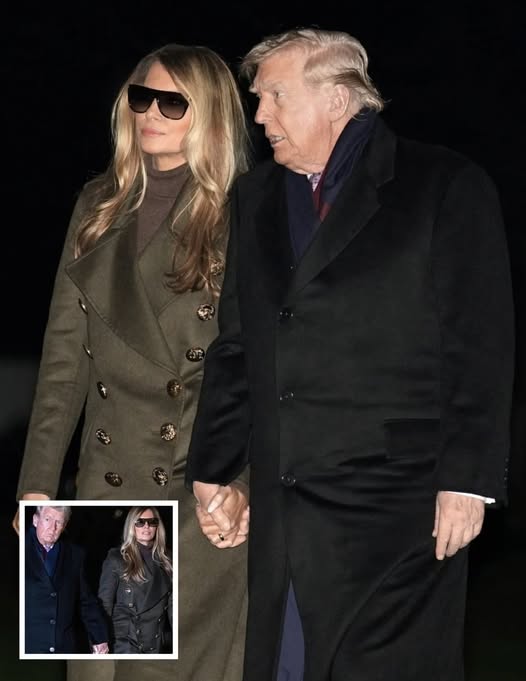
The ongoing fascination with her eyewear reflects more about society than Melania herself. Women in the public spotlight, especially those who don’t conform to expected expressions of warmth, are often judged harshly. A neutral look becomes “cold,” privacy becomes “suspicious,” silence becomes “calculated.” In this context, sunglasses are no longer a simple accessory—they become a canvas for projection.
Social media amplifies this pattern. Algorithms reward certainty, not subtlety. A simple explanation—comfort, habit, or light sensitivity—won’t trend like a provocative theory. Even debunked claims, like the body-double conspiracy, resurface whenever a photo looks slightly different, keeping the rumor alive.
What often gets lost is the human side. Public figures endure stress, scrutiny, and expectations most of us will never experience. In the White House, every choice was politicized. Sunglasses offered Melania a measure of control, comfort, and privacy—a small armor against a relentless spotlight.
Insiders and fashion analysts note her style has always been structured and consistent. Neutral palettes, clean lines, and repeated accessories communicate composure, not secrecy. Interpreting that as sinister ignores context, history, and practicality.
Even as memes, speculation, and recycled claims flood timelines, the simplest explanation remains the strongest: Melania Trump wore sunglasses because she’s comfortable, because she’s accustomed to scrutiny, and because she’s learned to protect herself in a world that watches every move.
At the end of the day, sunglasses are just sunglasses. They are not evidence. They are not a statement. They are not a mystery waiting to be solved. They are simply a small tool for privacy, style, and comfort for someone who lives under constant public gaze.
The next time speculation spreads online, pause and ask: are we judging context or creating a story? Share this article to spark a conversation about privacy, perception, and how quickly ordinary choices become overanalyzed.