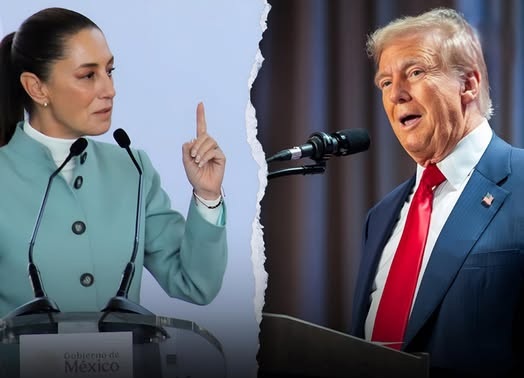
Rather than issuing a routine statement, Sheinbaum grounded Mexico’s response in established legal frameworks, referencing the United Nations Charter and Mexico’s historic foreign policy doctrine of non-intervention. Her remarks emphasized that the use of force against another state, regardless of political disagreements or criminal accusations, raises significant concerns for the stability of international norms.
At the center of Mexico’s position is Article 2(4) of the UN Charter, which prohibits the use or threat of force against the territorial integrity or political independence of any nation. Mexican officials argue that this principle is essential for maintaining a global system in which smaller and medium-sized countries are protected from unilateral actions by more powerful states.
Sheinbaum also referenced the Estrada Doctrine, a policy guiding Mexican diplomacy since 1930. The doctrine holds that governments should not judge or interfere in the internal legitimacy of other nations. In today’s context, Mexico views this principle as a safeguard against external intervention and a reminder of Latin America’s history with foreign involvement in domestic political affairs.
The Mexican government has stressed that actions taken in Venezuela could set precedents affecting the entire region. Officials have warned that using military force to resolve political disputes risks undermining sovereignty across the hemisphere and could weaken trust in multilateral institutions designed to manage conflict peacefully.
Mexico’s stance also reflects broader regional dynamics. Several Latin American governments have expressed concern about the implications of military interventions justified by security or legal arguments. These concerns are rooted in shared historical experiences and a preference for diplomacy, dialogue, and negotiated solutions.
At the same time, Sheinbaum’s comments carry significance for Mexico’s own relationship with the United States. Recent political rhetoric in Washington has included references to stronger actions against organized crime in the region. While Mexican leaders have downplayed the likelihood of direct intervention, they have consistently reaffirmed that cooperation must be based on mutual respect and respect for sovereignty.
Mexico has also voiced frustration with what it sees as limited action by international organizations. Alongside Foreign Secretary Juan Ramón de la Fuente, Sheinbaum noted that multilateral institutions must play a more active role in preventing unilateral actions and reinforcing international law.
In presenting its position, Mexico is advocating for the peaceful resolution of disputes and a recommitment to established diplomatic norms. Officials argue that long-term stability in the Americas depends on adherence to these principles rather than short-term strategic actions.
As discussions continue across the region and beyond, Mexico’s message remains consistent: the future of any nation should be determined by its own people, through lawful and peaceful means. Whether this position will influence broader hemispheric policy remains to be seen, but it underscores Mexico’s intention to remain a vocal advocate for non-intervention and international cooperation.