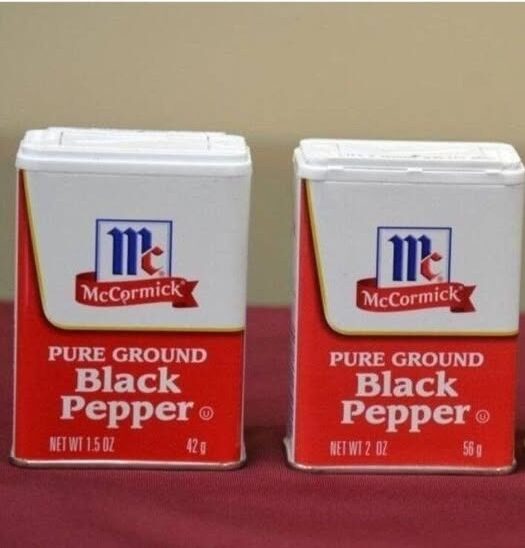
In a packed grocery aisle, shoppers rarely slow down. Decisions are made in seconds, guided less by labels than by shape, size, and what simply looks like a better deal. Packaging does the talking long before numbers do. That quiet reality is now at the center of a legal battle unfolding in one of the most unassuming places imaginable: the spice aisle.
The dispute pits food giant McCormick & Company against smaller competitor Watkins Incorporated. At issue is a change McCormick allegedly made to one of its pepper products—reducing the amount inside the container while keeping the outer packaging nearly identical. According to the complaint, what once held about eight ounces now contains closer to six, even though the bottle looks much the same on the shelf.
Watkins argues that this isn’t just a technical adjustment—it’s a visual sleight of hand.
Unlike McCormick’s opaque containers, Watkins sells its pepper in clear bottles, allowing shoppers to immediately see how much they’re getting. McCormick’s containers, while legally labeled, conceal the contents. On a crowded shelf, the McCormick bottle appears larger, fuller, and more substantial, even though it may hold a similar—or smaller—amount of product.
That distinction matters more than many consumers realize. Research consistently shows that shoppers rely heavily on visual cues, especially for routine purchases. Bigger containers are instinctively associated with better value. Fine print gets overlooked. Net weight numbers rarely slow anyone down. In that environment, packaging isn’t just presentation—it’s persuasion.
Continue reading on next page…