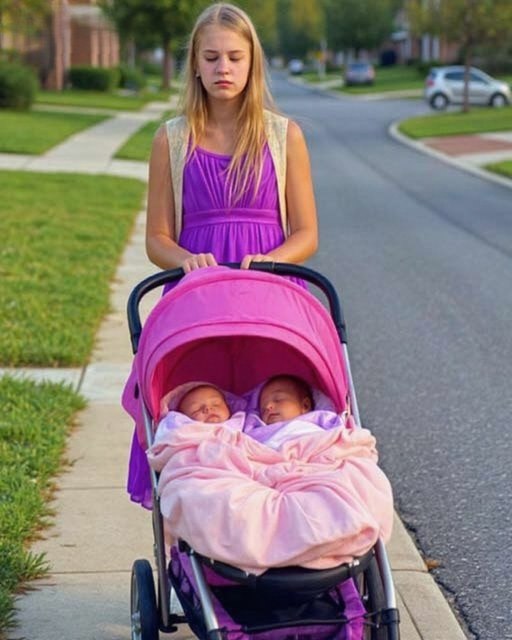
Weeks later, the hospital called. The babies were healthy, but the mother remained unknown. Could we consider temporary foster care while the state searched for relatives?
I pictured our life: long hospital shifts, Lucy’s homework and chorus practice, our quiet exhaustion. Two newborns? Could we stretch that far?
Lucy stepped forward, voice steady. “Please, Mom. Just for a while. I’ll help. I’ll do everything.”
Her determination struck me. She had already bonded with them the moment she lifted those blankets in the park. I said yes.
We named them Grace and Hope. The early months were chaos and magic—bottle warmers, disappearing socks, sleepless nights filled with soft cries and sleepy giggles. Lucy astonished me, mastering the midnight feeds, learning the babies’ cries, singing the same lullabies until they became part of the house’s rhythm.
Six months later, the court called. No family had come forward. “Could we adopt them?” Lucy asked, quietly determined.
“You’re still a kid,” I said.
“I know,” she replied. “But you’re not.”
She was right. We were already a family. When the adoption papers were signed, we cried on the courthouse steps. Three names became one household, bound by choice and love.
Years passed. Grace and Hope became light incarnate—messy ponytails, sticky cheeks, endless drawings on the fridge. Lucy went to college, but still came home to braid hair and read bedtime stories. Life had its hard days, its good ones—but mostly, we had each other.
Then, ten years later, the phone rang.
“Mrs. Davis? I’m Martin Caldwell, attorney for the estate of Leonard Carmichael. Are you the adoptive guardian of Grace and Hope Davis?”
My pulse raced. “Yes.”
He explained: Leonard Carmichael, a wealthy businessman, had left a $4.7 million trust for Grace and Hope—and a letter explaining the truth.
Dear Mrs. Davis,
If you are reading this, I have passed, and the truth must follow. Grace and Hope are my granddaughters. Ten years ago, my son made terrible choices. The mother disappeared after giving birth, and I searched until I found them with you. I cannot repay what you’ve given my granddaughters: safety, love, a future. Please accept this trust on their behalf.
Lucy, now twenty-four, stood behind me, wide-eyed. “So… their grandfather left them millions?”
“It seems so,” I said, still catching up.
He handed Lucy a smaller envelope. A photo slid out—two tiny babies in a bassinet, Grace and Hope—and a note:
Dear Lucy,
Because of you, my granddaughters lived. You may not share our blood, but in my eyes, you are family. Thank you for giving them life twice—once in the park, and again through your heart.
Lucy pressed the photo to her chest and cried, awe and relief mingling in her tears.
The news remembered her story: the brave teen who once pushed a stroller with abandoned newborns. Now those babies had a future secured—and an inheritance from the grandfather they never knew.
Money changed practical things—college funds, security, opportunities. But the greatest inheritance? The love a scared girl offered without hesitation. The love that turned strangers into family. The love that outlasts secrets, time, and fortune.
And in the end, it was worth far more than $4.7 million.
Sometimes the greatest gifts aren’t money—they’re the courage, love, and care we offer without thinking twice.
If this story touched you, share it and remind someone that love can change lives in ways you never imagine.