
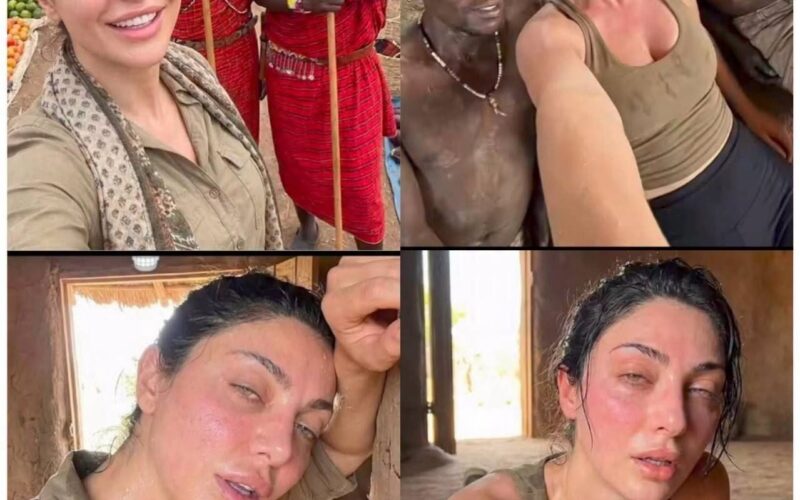

She Thought She Knew What the Trip Would Be Like
Claire had spent months planning her journey.
She wanted to see more than the typical tourist attractions. She hoped to experience local communities, taste traditional food, learn about everyday life, and spend time outdoors.
Before leaving, she had the usual expectations of someone preparing for a major trip.
She imagined the photographs she would take.
She wondered what the landscapes would look like in person.
She even made a list of things she wanted to buy.
But she also realized something once she arrived:
Africa wasn’t one single experience.
It was a vast continent made up of different countries, cultures, languages, landscapes, communities, and traditions.
Every place felt different.
And that was one of the first things that surprised her.
The Morning That Changed Her Perspective
Several days into the trip, Claire joined a small community-based excursion.
There were no crowds.
No elaborate entertainment.
Instead, she spent part of the morning with local residents who were involved in a small tourism project.
They showed visitors how certain foods were prepared, explained local traditions, and talked about the challenges and opportunities facing their community.
Claire mostly listened.
Then an older woman sitting beside her asked a question.
“Why did you come here?”
Claire laughed.
She gave the answer she had already given several times.
“I wanted to see Africa.”
The woman smiled.
“And what have you seen?”
Claire started to answer.
Then she stopped.
She realized she didn’t know how to respond.
She had seen beautiful landscapes.
She had taken photographs.
She had visited interesting places.
But the question wasn’t really about sightseeing.
It was about whether she had actually paid attention.
The Conversation She Couldn’t Forget
The woman began telling Claire about her community.
She spoke about family, work, education, changing traditions, and the importance of young people having opportunities without feeling that they had to leave home to find them.
Claire expected to hear a story about the past.
Instead, she heard someone talking about the future.
That distinction stayed with her.
The woman wasn’t asking visitors to feel sorry for her community.
She wanted visitors to understand it.
She wanted them to see the people behind the photographs.
And she wanted tourism to create opportunities without erasing the culture that made the place special.
That idea was more powerful to Claire than she expected.
UN Tourism similarly highlights community participation, cultural preservation, local employment, and environmental sustainability as important elements of responsible tourism.
A Different Kind of Souvenir
Later that afternoon, Claire walked through a local market.
Before the trip, she had imagined buying souvenirs for everyone back home.
But now she found herself looking at things differently.
She spoke with artisans about their work.
She learned where certain products came from.
She asked questions instead of simply taking photographs.
And she realized that a souvenir could represent more than a memory.
It could also support someone’s work.
That doesn’t mean every purchase automatically benefits a community. But Claire began paying more attention to where her money went and who was actually involved in producing what she bought.
It was a small change.
But it was the beginning of many others.
Then She Came Home
The trip eventually ended.
Claire returned home with hundreds of photographs on her phone.
Her friends asked the usual questions.
“How was it?”
“What was your favorite place?”
“What did you see?”
She showed them photographs.
But when they asked what her favorite moment had been, she couldn’t choose a landscape.
It was the conversation.
That surprised even her.
She had traveled thousands of miles expecting the destination to change her.
Instead, it was the people she met who changed the way she looked at her own life.
The Changes Began Slowly
Nothing dramatic happened when Claire returned.
She didn’t quit her job the next morning.
She didn’t sell everything she owned.
She simply began questioning certain habits.
Why did she buy things she didn’t need?
Why did she spend so much time rushing?
Why did she sometimes complain about having too little time while spending hours scrolling through her phone?
And why had she assumed that happiness required constantly having something new to look forward to?
The trip hadn’t given her all the answers.
It had simply given her better questions.
She Returned Years Later
Several years passed before Claire visited again.
This time, she noticed something different.
The community she had visited had changed.
Some projects had grown.
New businesses had appeared.
Young people were taking part in local tourism initiatives.
Some traditions were being preserved while other parts of daily life were changing naturally.
It reminded Claire of something she had failed to understand during her first visit.
Communities aren’t frozen in time for visitors.
They evolve.
People build businesses.
Children grow up.
Technology changes.
New opportunities appear.
Old challenges remain.
And tourism can be one part of that complicated picture.
In places such as Rwanda’s Nkotsi Village, for example, UN Tourism describes community initiatives connecting tourism with cultural heritage, conservation, education, and economic opportunities for local residents.
The Trip She Almost Didn’t Take
Years later, Claire found an old photograph from her first journey.
It showed her standing beside the woman who had asked her that simple question.
She stared at the photograph for a long time.
Then she remembered:
“What have you seen?”
At the time, she thought the question was about the trip.
Now she understood that it had been about something much bigger.
Travel had taught her that seeing a place and understanding it aren’t the same thing.
A photograph can capture a landscape.
It cannot capture everything happening inside it.
A guidebook can describe a tradition.
It cannot replace listening to the people who live it.
And a short visit can never tell you everything about an entire country, let alone an entire continent.
What She Took Home
Claire still loved traveling.
But after that journey, she traveled differently.
She researched local businesses before visiting.
She looked for experiences led by local people.
She learned more about the places she visited instead of relying on assumptions.
And most importantly, she stopped expecting every destination to fit the story she had imagined before arriving.
The world was more complicated than that.
And much more interesting.
One Journey, A Different Way of Seeing
Claire often says that her trip didn’t change her life overnight.
It changed it gradually.
A conversation here.
A question there.
A new habit.
A different choice.
A little more curiosity.
A little less assumption.
That’s perhaps the most lasting kind of travel story.
Not one where a person visits a distant place and discovers a magical world that exists only for visitors.
But one where a person meets people with their own lives, ambitions, traditions, challenges, and hopes—and returns home with a better understanding that the world is far bigger and more diverse than it looked from a distance.
Claire went to Africa expecting to collect memories.
Instead, she came home with a new way of looking at the world.
And that was the souvenir she never expected to bring back.