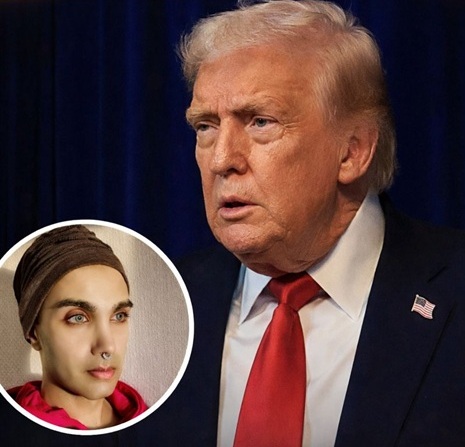
Predictions about the future have long captured human imagination, offering a way to explore both curiosity and concern. Recently, psychic Nicolas Aujula, who previously drew attention for claiming to foresee the COVID-19 pandemic, has shared a set of forecasts for 2026 that are drawing widespread discussion.

Aujula suggests that 2026 could be a year of significant global disruption. He speaks broadly of interconnected events, rather than focusing on one country or leader. Among the scenarios he mentions are natural events such as earthquakes affecting parts of southern Europe, Turkey, and the Pacific region, as well as severe storms with strong winds and flooding.
He also touches on potential social and political upheaval, including controversies involving public figures in the United Kingdom and the United States. Aujula describes these as symbolic representations of broader instability rather than exact predictions. In addition, he references a sudden-onset health concern involving neurological issues, which he says could cause public anxiety.

Aujula emphasizes that his visions are involuntary and symbolic. He notes that while the emotional tone of his forecasts feels clear, the timing and precise details are uncertain. He stresses that symbols can be misinterpreted and events may not unfold exactly as imagined.
Experts note that predictions of this nature often reflect existing societal concerns. Earthquakes and storms echo widespread fears about natural disasters and climate change, while references to political controversies reflect ongoing public interest in leadership and accountability. Health-related predictions resonate with heightened awareness of pandemics and emerging illnesses.

Rather than serving as definitive forecasts, Aujula’s visions may function as prompts for awareness and reflection. Behavioral science research suggests that dramatic predictions can heighten stress but also encourage preparedness. The key, experts say, is to maintain perspective and focus on actionable measures such as emergency planning, community readiness, and personal resilience.
Historically, humanity has faced crises that initially seemed destabilizing, from natural disasters to financial and political upheavals. Communities have consistently demonstrated the ability to adapt, recover, and strengthen systems in response to challenges.
Aujula himself cautions that his predictions are interpretive, not deterministic. He encourages audiences to treat them as symbolic narratives rather than certainties. In this sense, the value of his forecasts lies less in literal accuracy and more in encouraging discussion about preparedness, social resilience, and collective awareness.
Public responses to dramatic forecasts often vary widely, ranging from curiosity and fascination to skepticism and concern. Observers emphasize the importance of distinguishing between symbolic visions and actionable reality. While engaging with these predictions can provide insight into societal fears, practical planning and calm, informed judgment remain the most effective strategies for navigating uncertainty.
Ultimately, Aujula’s forecasts for 2026 serve as a lens on human perception and cultural anxiety. They remind society that, even amid uncertainty, resilience is built through careful preparation, adaptability, and thoughtful response. In the face of potential challenges, measured action and perspective remain the most reliable tools for maintaining stability.