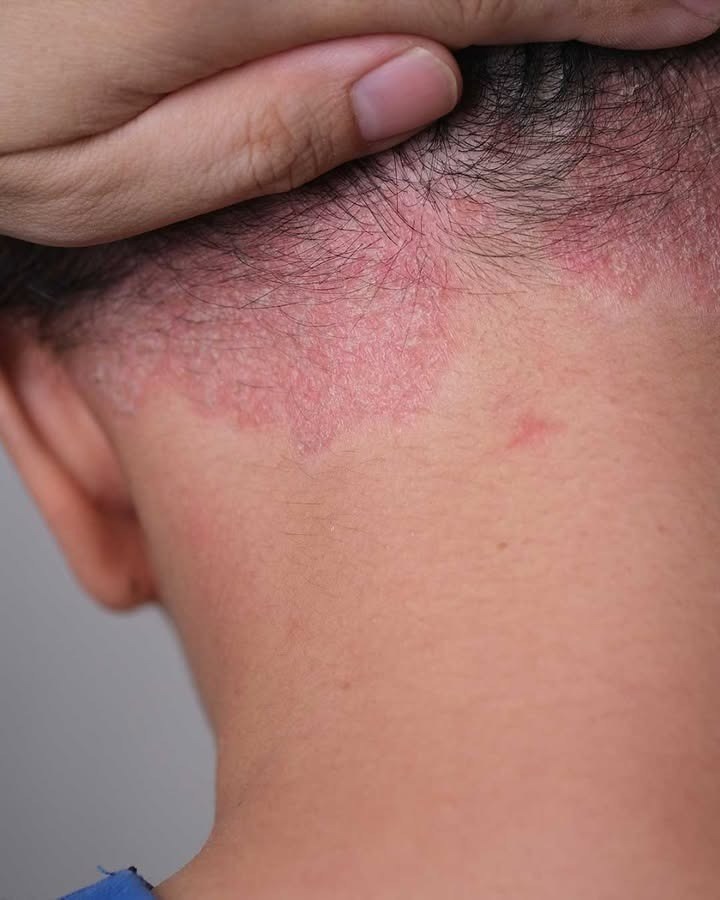
What Causes Scalp Psoriasis?
The root cause isn’t fully understood, but scalp psoriasis is linked to:
- Immune system overactivity triggering inflammation and rapid skin turnover
- Genetics, since psoriasis often runs in families
- Environmental triggers such as stress, skin injuries, infections, or certain medications
Being aware of triggers can make a big difference in preventing flare-ups.
How to Tell the Difference from Dandruff or Dermatitis
Scalp psoriasis can be mistaken for other scalp issues:
- Dandruff usually produces oily, yellowish flakes, not dry silvery scales
- Seborrheic dermatitis presents with oily redness and scaling, rather than dry patches
A dermatologist can confirm the diagnosis and recommend the most effective treatment.
When to See a Doctor
Consult a healthcare professional if:
- The red patch persists or spreads
- There is severe itching or discomfort
- You notice swelling, pus, or signs of infection
Early diagnosis helps manage symptoms and prevent complications.
Treatments That Work
Treatment depends on severity and may include:
- Topical solutions: medicated shampoos, corticosteroids, vitamin D analogs
- Systemic treatments or phototherapy for severe cases
- Over-the-counter products with coal tar or salicylic acid to reduce scaling and itchiness
Following a doctor’s treatment plan ensures the best results.
Managing Scalp Psoriasis at Home
Simple lifestyle adjustments can make a huge difference:
- Use gentle shampoos and conditioners
- Avoid harsh chemical treatments or excessive heat
- Keep the scalp moisturized; consider a humidifier in dry environments
- Minimize stress and practice relaxation techniques
- Avoid scratching to prevent irritation or infection
Preventing Future Flare-Ups
Flare-ups can be minimized by:
- Identifying and avoiding triggers (stress, injury, certain medications)
- Maintaining a healthy lifestyle with balanced diet, exercise, and sleep
- Regular check-ups to monitor and adjust treatment as needed
With proper care and awareness, scalp psoriasis can be effectively managed—allowing your loved one to feel comfortable and confident again.
Take Action: If you or a family member notices persistent red patches or itching on the scalp, don’t wait—consult a healthcare provider to get a clear diagnosis and the right treatment plan. Early intervention makes all the difference!