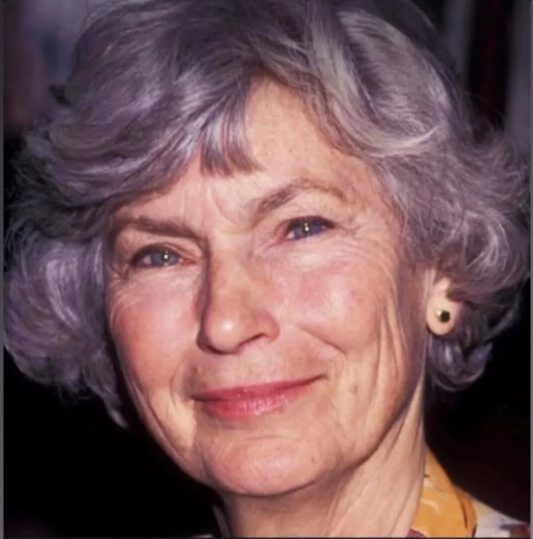
Priscilla Pointer, a respected and enduring figure in American theater, film, and television, has passed away at the age of 100. She died peacefully in her sleep at an assisted living facility in Ridgefield, Connecticut, according to her family. Her passing marks the end of a remarkable career defined not by celebrity spectacle, but by discipline, craft, and quiet excellence.
Born in New York City in 1924, Pointer came of age during a time when acting was treated as a serious profession—one that required training, patience, and resilience. She was never shaped by hype or quick fame. Instead, she built her foundation on the stage, where precision and emotional truth mattered more than visibility. Theater was her proving ground, and it shaped the controlled, intelligent performances that later became her signature on screen.
In her early years, Pointer worked extensively in Broadway and regional theater, earning a reputation as a dependable and thoughtful performer. Directors trusted her instincts. Fellow actors respected her preparation. She approached every role with the same care, whether it was a leading part or a brief appearance. That consistency set her apart and allowed her to transition seamlessly into film and television later in life.
Unlike many of her contemporaries, Pointer’s on-screen career took off when she was older—and it only strengthened her presence. Beginning in the 1970s, she became a familiar and trusted face in American cinema, often cast in roles that required authority, emotional restraint, and psychological depth. She brought credibility to every scene without demanding attention, proving that impact does not require excess.
Her film work includes appearances in some of the most influential and enduring movies of their time. She appeared in Carrie (1976), The Onion Field (1979), Blue Velvet (1986), and A Nightmare on Elm Street 3: Dream Warriors (1987). These films remain widely watched, analyzed, and referenced, especially within discussions of classic cinema and genre-defining storytelling. Pointer’s performances helped ground these films in realism, adding layers of humanity that still resonate with audiences decades later.
Television audiences also benefited from her steady presence. Pointer appeared across a wide range of popular and critically respected series, including Dallas, L.A. Law, The Waltons, ER, and Judging Amy. Her guest roles often brought weight and authenticity to storylines, reinforcing her reputation as an actor who elevated every project she joined. In an industry that increasingly favored novelty, she represented reliability and depth.
Her influence extended beyond her own performances. Pointer was the mother of actress Amy Irving, whose successful career reflects a shared household rooted in artistic discipline and respect for the craft. She was also married to Jules Irving, a major figure in American theater and a co-founder of the San Francisco Actors Workshop. Together, they were part of a movement that treated theater as cultural work with lasting significance, not just entertainment.
Those who worked alongside Pointer consistently described her as calm, prepared, and exacting. She knew her lines, respected the process, and valued collaboration. In contrast to today’s fast-paced, trend-driven entertainment landscape, her approach reflected a slower, more intentional era—one focused on character integrity rather than instant visibility.
Living to 100, Pointer witnessed extraordinary changes in the industry: the decline of the studio system, the rise of television, the growth of independent cinema, and the dominance of streaming platforms. Through it all, she remained grounded and relevant, never chasing trends or reinventing herself for attention. Her work endured because it was rooted in timeless human behavior.
In her later years, Pointer lived quietly, away from public attention. There were no farewell tours or high-profile appearances. That restraint mirrored the way she lived and worked throughout her life. She had already made her contribution—and it spoke for itself.
Priscilla Pointer leaves behind a legacy built on professionalism, intelligence, and longevity. Her career serves as a reminder that quiet excellence still matters, and that substance outlasts noise. Her performances continue to be watched, studied, and appreciated, ensuring her influence remains part of American film and theater history.
What are your favorite films or television roles featuring Priscilla Pointer? Share your memories and reflections, and help celebrate a life devoted to the art of storytelling.