The Power—and Risk—of Viral Content
Short-form platforms are designed around rapid engagement. A mysterious clip can be watched, shared, reposted, discussed, and turned into reaction content long before anyone establishes its original source.
That creates an unusual situation.
The original footage may contain only a few seconds of information, while thousands of comments can create an entire narrative around it.
Some viewers may interpret the scene as evidence of an imminent collapse. Others may believe it is staged. Still others may connect it with unrelated bridge disasters they have previously seen in the news.
The result is that the discussion surrounding a video can become much larger than the evidence contained within the video itself.
Real Bridge Disasters Put the Imagery in Perspective
The footage also reminded viewers of genuine infrastructure failures around the world.
One notable example occurred in Taiwan in 2019, when the Nanfang'ao Bridge collapsed in Yilan County. The disaster involved vehicles and boats in the area and became widely documented through photographs and video.
Other bridge failures have similarly demonstrated how quickly a familiar piece of infrastructure can become a major emergency.
These real events help explain why a damaged bridge in a viral video can feel particularly unsettling. The possibility of structural failure is not fictional, even when the circumstances of a particular video remain uncertain.
What the Video Cannot Prove
One of the most important lessons is the difference between what viewers see and what they know.
A video may show:
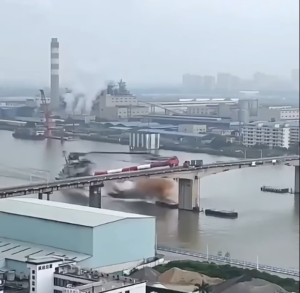
- A tanker positioned beneath a damaged-looking structure
- Visible cracks or broken concrete
- Debris or construction materials
- A dramatic camera angle
- People reacting to the scene
But those details do not automatically establish:
- When or where the footage was recorded
- Whether the bridge was actually collapsing
- Why the tanker was there
- Whether anyone was injured
- Whether the structure was being repaired or demolished
- Whether the footage was edited or staged
Without independent verification, those questions should remain open.
Why Infrastructure Maintenance Matters
Even without knowing the origin of the viral footage, the subject raises a legitimate issue.
Bridges and other transportation structures require regular inspection, maintenance, and investment. Aging infrastructure can present serious challenges when deterioration is overlooked or repairs are delayed.
Heavy vehicles also make structural safety particularly important because bridges must be designed and maintained to accommodate the loads and traffic conditions they experience.
 Up Next: Page 3 of 3
For that reason, striking social-media footage can sometimes serve as a useful...
There is another reason scenes like this spread so quickly: people are naturally drawn to situations in which something familiar appears suddenly...
Continue Reading