
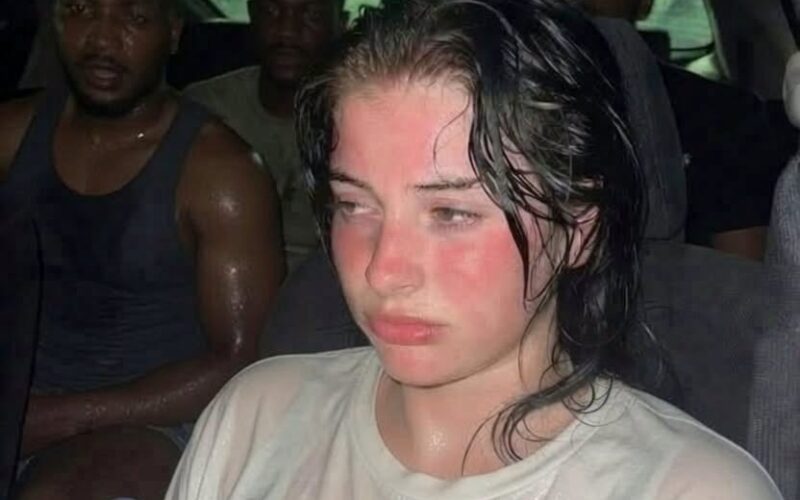

She became unsteady and had difficulty moving forward on her own.
The people nearby noticed almost immediately.
Instead of leaving her to manage by herself, they stepped in and offered support.
A Sudden Change Can Have Many Causes
Seeing someone suddenly struggle with balance or walking can be concerning, but appearances alone cannot explain what caused it.
A person may become unsteady for many different reasons, ranging from temporary problems such as exhaustion or dehydration to injuries, medication effects, balance problems, or other medical issues.
That is why it would be misleading to determine a diagnosis simply from a photograph or short video.
What matters most in a real situation is how suddenly the problem began, what other symptoms are present, and whether the person needs medical attention.
The People Around Her Didn’t Ignore It
One of the most noticeable parts of the moment was the response from those nearby.
Once it became clear that she was having difficulty walking, they provided physical support rather than expecting her to continue alone.
That simple reaction can make a significant difference when someone is suddenly unsteady.
If a person appears seriously confused, loses consciousness, has severe weakness, develops sudden trouble speaking, experiences chest pain, or has other alarming symptoms, emergency medical assistance should be sought.
What Actually Happened?
That’s the part that makes the moment so intriguing.
Without reliable information about the circumstances, it isn’t possible to say exactly why she was struggling to walk.
A photograph can capture what happened afterward, but it cannot necessarily explain what caused the situation in the first place.
And that’s an important distinction.
Online images and short clips often encourage viewers to fill in the missing details themselves. But a person’s appearance alone isn’t enough to establish a medical diagnosis or explain an unexpected event.
A Reminder to Look Beyond the Image
The scene may look dramatic at first glance, but the real story depends on what happened before and after the moment was captured.
Was she recovering from an injury?
Had she become temporarily unwell?
Was she simply exhausted or experiencing a brief balance problem?
Or was there another explanation entirely?
Without additional verified information, those questions remain unanswered.
What we can see is much simpler: a woman was having difficulty walking, and people nearby recognized that she needed support.
Sometimes, the most responsible way to tell an intriguing story is also the most honest one—to acknowledge what the available evidence shows and leave the unanswered questions unanswered until more reliable information becomes available.