They may see someone asking for help without asking what happened before that moment.
They may see an old coat, a shopping cart, or a collection of empty bottles.
But behind those objects is a human being with memories, relationships, fears, talents, regrets, and hopes.
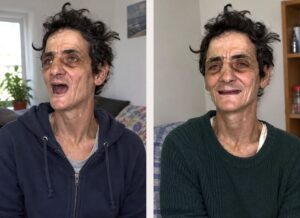
Rita's story became powerful because someone stopped long enough to look beyond the surface.
A Second Chance Doesn't Erase the First Life
Rita's transformation didn't mean her previous life suddenly became meaningless.
The years of struggle were part of her story.
So was the grief.
So was the loss of her son.
So were the nights spent wondering where her next meal would come from.
But surviving those years also revealed something that had been hidden beneath the exhaustion.
Rita had resilience.
She had continued moving even when there seemed to be nowhere to go.
She had continued collecting bottles.
She had continued searching for food.
She had continued waking up each morning.
That isn't the kind of strength that makes headlines.
It is quiet strength.
The kind that exists simply because someone refuses to disappear completely.
What Her Story Really Reveals
Rita's story eventually traveled far beyond the streets where she had spent so many years.
People were fascinated by the transformation they could see.
But the more important transformation happened underneath.
Someone had reminded Rita that she was still visible.
Still worthy.
Still capable of imagining something beyond survival.
Her story also raises an uncomfortable question about the way society treats people experiencing homelessness.
How many people are walking through our cities carrying stories that nobody has bothered to hear?
How many have talents they haven't been able to use because poverty has closed every practical door?
 Up Next: Page 5 of 5
How many have been reduced to their circumstances rather than remembered as...
Rita's life is a reminder that homelessness is not an identity.
Continue Reading