A person’s character is seldom defined by awards earned at the height of their career. More often, it is revealed in small decisions made without expectation of recognition. My name is Robert Hayes. For two decades, the Marine Corps shaped my life around duty and discipline. At fifty-two, however, I found myself facing a very different assignment—standing in a crowded airport terminal with my eight-year-old daughter, Emma. She has her mother Maria’s dark curls and an unshaken belief that the world is kind.
We were traveling to the Rockies to visit the cabin where I grew up, a trip Maria and I had planned before illness took her from us. I had spent nearly all my savings on first-class tickets, hoping to give Emma something special after a year marked by loss. As we waited at Gate C4, surrounded by restless passengers and delayed announcements, an unexpected situation unfolded.
The boarding line stalled around a woman layered in heavy clothing despite the summer heat. A broad hat and scarf concealed most of her face and hands. She moved carefully, as though each motion caused discomfort. When a frustrated gate agent urged her to hurry, she flinched. Her scarf shifted briefly, revealing severe burn scars. Her fingers trembled as she tried to manage her documents, which soon slipped to the floor. Murmurs of impatience rose behind us.
Emma whispered a question about why the woman was dressed that way. I told her that some people carry invisible burdens and deserve patience. As the woman struggled, the agent suggested she step aside to avoid delaying others. I caught a glimpse of her eyes—steady but shadowed with embarrassment. She quietly mentioned that her hands had not functioned properly since a house fire the previous year.
Training has a way of surfacing in moments like that. In the Marines, you look after those who are vulnerable. I picked up her papers and noticed her seat assignment: 23B, a middle seat in economy. Considering her injuries, it would be an uncomfortable journey. I glanced at the first-class tickets meant for Emma and me and understood that comfort is sometimes best given away.
I approached the counter and arranged an exchange. The woman—her name was Sarah Mitchell—took my seat in 1A, where she would have space and privacy. When I explained to Emma that we were moving to the back so someone else could sit more comfortably, she accepted it without hesitation and simply asked if our new seats still had a window nearby.
Row 23 was tight, and my old back aches reminded me of past service. Yet midway through the flight, a flight attendant delivered a handwritten note. Sarah thanked me for treating her with dignity in a moment when she felt exposed. She wrote that kindness had restored a measure of confidence she feared she had lost. I placed the note in my pocket, understanding that no premium cabin could have offered greater satisfaction.
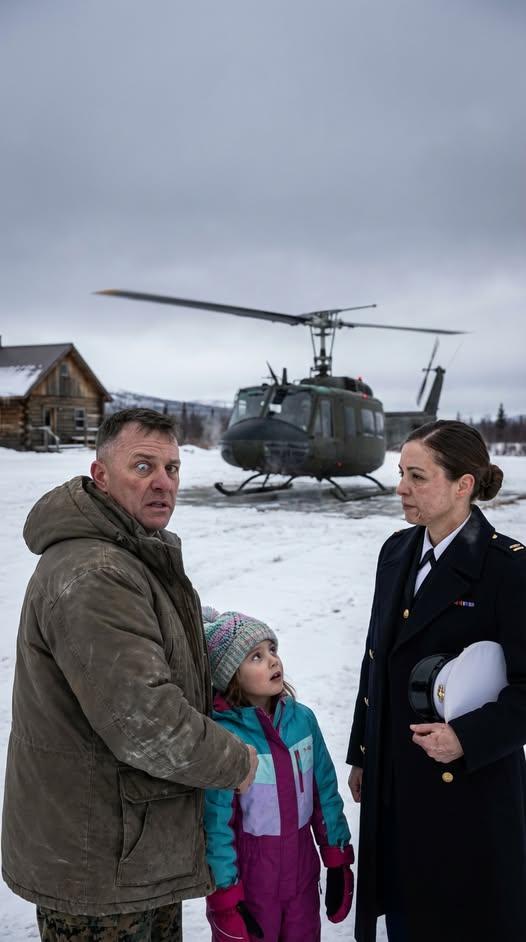
At my father’s cabin, we spent quiet days surrounded by tall fir trees and mountain air. Then, one morning, the hum of helicopter blades echoed through the meadow. A military Black Hawk landed nearby, and out stepped Colonel James Morrison, my former commanding officer. He explained that Sarah Mitchell was the widow of General William Mitchell, a respected four-star leader. Since the accident that claimed her husband and left her injured, she had lived largely out of public view.
My simple gesture on that flight had reached influential ears. Sarah was launching a national initiative to assist burn survivors with dignified travel and medical support. She intended to name the first grant in my honor and invited me to serve as a logistics advisor. Colonel Morrison also presented me with the Citizen Service Medal, though the opportunity to continue serving others felt like the greater recognition.
Six months later, I stood in a ballroom in Washington, D.C., addressing a room filled with supporters. Sarah sat in the front row without the hat or scarf, her scars visible and her posture confident. Emma sat beside her, smiling proudly.
I told the audience that true elevation is not measured by altitude but by the willingness to lift someone else when they stumble. That journey had never been about luxury seating or scenic views. It was about teaching my daughter that worth is defined by compassion and sacrifice. In choosing to give up a seat, we discovered a renewed sense of direction—and a horizon that felt wide open once more.