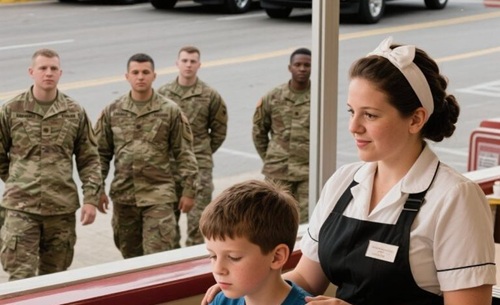
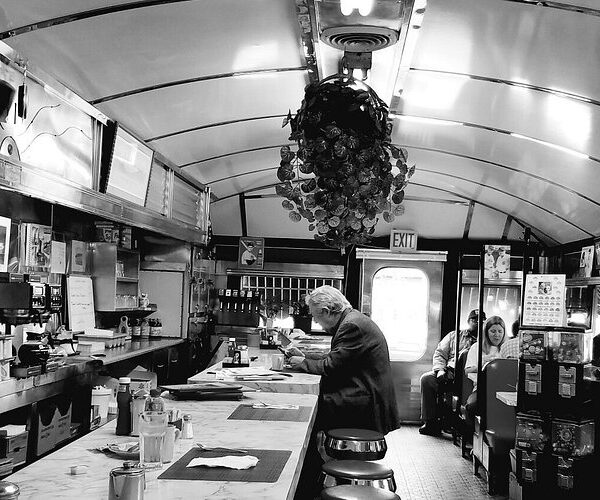
In the small town of Brookfield, Kansas, mornings moved slowly. The sun crept across the flat plains, stretching shadows over brick buildings, a hardware store with peeling paint, and a laundromat that hummed steadily with spinning washers. Amid it all sat Rosie’s Diner, a familiar landmark with red vinyl booths, checkered linoleum floors, and the comforting aroma of coffee, pancakes, and sizzling bacon.
Jenny Miller, in her late twenties, had worked at Rosie’s for years. Known for her gentle smile and quiet patience, she greeted every customer by name—Mr. Harold, the retired postman with his black coffee at 6:30 a.m.; the Whitmore twins, sharing eggs and toast; Mrs. Klein, who liked oatmeal with extra cinnamon.
Yet behind Jenny’s cheerful demeanor lay a profound loneliness. Orphaned as a teenager, with only a distant aunt as family, she lived alone in a small second-floor apartment above a thrift store. Life was predictable, safe, but empty. She clung to routines—her morning coffee before shifts, folding napkins meticulously, listening to soft country and classic rock on the radio—as small anchors in an otherwise quiet existence.
The Boy in the Corner
One crisp October morning, Jenny noticed a boy sitting alone in a corner booth. No older than ten, with a worn backpack and a book he barely opened, his dark hair fell into tired eyes. He asked for only a glass of water, no pancakes, no eggs, no bacon—the usual cravings of a child—sipping slowly, as if every drop mattered.
The next morning, he returned. And the morning after that, always at exactly 7:15 a.m., always ordering water. Jenny watched quietly, curiosity and concern rising. Something about his quiet perseverance, the way he hunched over the table without expectation, tugged at her heart. After a week, she decided to act.
One morning, she placed a small plate of pancakes with butter and syrup beside him. “Extra from the kitchen. Someone should eat it,” she whispered.
The boy froze, hesitant, as if kindness was unfamiliar. Slowly, he ate, murmuring a barely audible “thank you” before returning to his water.
A Quiet Bond Forms
From that day, Jenny ensured the boy had breakfast daily—pancakes, oatmeal, eggs, toast—whatever the morning brought. They never exchanged names or personal details. Words weren’t necessary; trust and care passed silently between them.
Whispers spread through town. Mr. Harold raised an eyebrow. “Feeding a kid for free, Jenny? Could cause trouble.” Carl, the diner manager, warned her, “You can’t keep giving away food. It’ll ruin the books.”
Jenny ignored the warnings. Every tip she earned went to the boy’s meals if needed. She carried a journal once kept by her late father, a military medic, who had written, No one ever becomes poorer by feeding a hungry child. She held onto those words as she served the boy, quietly, steadfastly.
Weeks of Absence
Then, one morning, the boy didn’t appear. Booths were empty, plates untouched, and no explanation arrived. Jenny left meals for him, day after day, but he never returned. Anxiety gnawed at her. She considered calling authorities but had no identifying information beyond a frayed backpack. The diner felt colder, emptier, the silence oppressive.

Continue reading on next page…