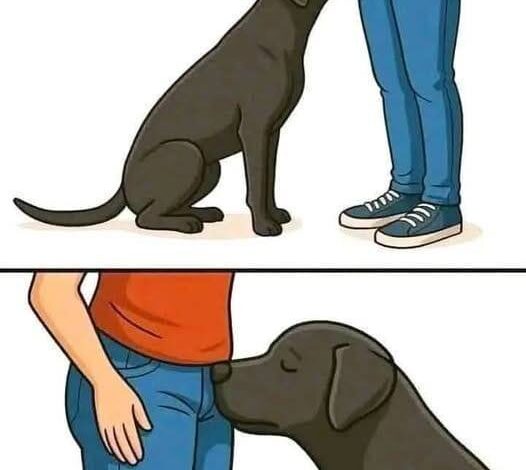
The bond between humans and dogs is built on loyalty, instinct, and a language beyond words. In 2026, being a responsible dog caregiver goes far beyond feeding and walks—it’s about understanding the subtle, often puzzling behaviors your canine companion uses to communicate. Among these, one of the most misunderstood acts is the infamous sniff… yes, the one aimed at your midsection. But before you cringe, know this: what seems socially awkward to us is, for dogs, an essential form of communication.
Dogs Live in a World of Scent
For a dog, the world isn’t seen or heard in the way we humans experience it—it’s smelled. Their sense of smell is thousands of times more sensitive than ours, letting them read complex chemical signals we can’t even detect. When your dog moves toward your groin or rear, they’re not trying to embarrass you—they’re gathering critical “bio-data.”
Human apocrine glands, concentrated in the armpits and groin, release pheromones. These chemical signals tell dogs about your sex, age, emotional state, and even subtle health cues. In canine terms, a sniff is as deliberate as a handshake, a polite introduction, and a business card all rolled into one. It’s their way of asking: Who are you? How are you feeling? What energy are you bringing into this space?
When Instinct Meets Human Etiquette
While normal biologically, this behavior often clashes with human social norms. Scolding a dog for sniffing can create confusion or fear. Dogs have no concept of “rude”—they’re simply following instincts refined over thousands of years. The key is redirection. Teaching simple commands like “sit” or “stay” when curiosity peaks can help dogs channel their sniffing instincts politely, while rewarding calm behavior reinforces positive interactions.
Continue reading on next page…