A Simple Challenge With a Deeper Meaning
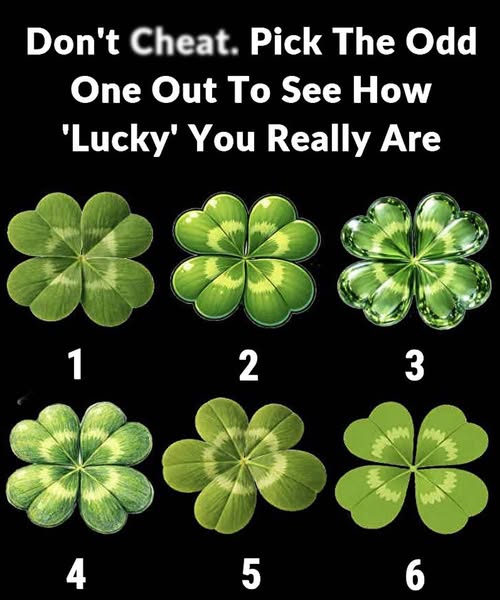
At first glance, this visual puzzle seems straightforward: six clovers and one task—pick the one that doesn’t belong. It looks like a light and playful activity, but the more you observe it, the more it becomes clear that the real focus is not just the answer.
Instead of testing luck, the challenge invites you to explore how you think, what catches your attention, and how you approach decisions.
Why the Puzzle Feels Tricky
Clovers are often associated with good fortune, especially the rare four-leaf variety. In this image, however, each clover has unique features. That subtle variation shifts the puzzle from a simple selection task into an exercise in observation.
There may not be a single obvious “wrong” choice. Instead, the activity encourages personal interpretation, making it more about perception than correctness.
How the Brain Responds to Visual Choices
The human mind naturally searches for patterns. When presented with multiple similar images, it compares details such as shape, symmetry, color, and structure.
However, everyone processes information differently. Some people notice small visual differences immediately. Others rely on instinct. Some focus on overall balance, while others examine fine details.
That variation in attention is what makes this type of puzzle engaging and thought-provoking.
What Your Choice May Reflect
While there is no right or wrong answer, different selections can reflect different thinking styles:
- Choosing the first option may suggest a preference for simplicity and straightforward thinking.
- Selecting the second could indicate an analytical approach that values balance and detail.
- The third might appeal to those who appreciate uniqueness and bold visual features.
Continue reading on next page…