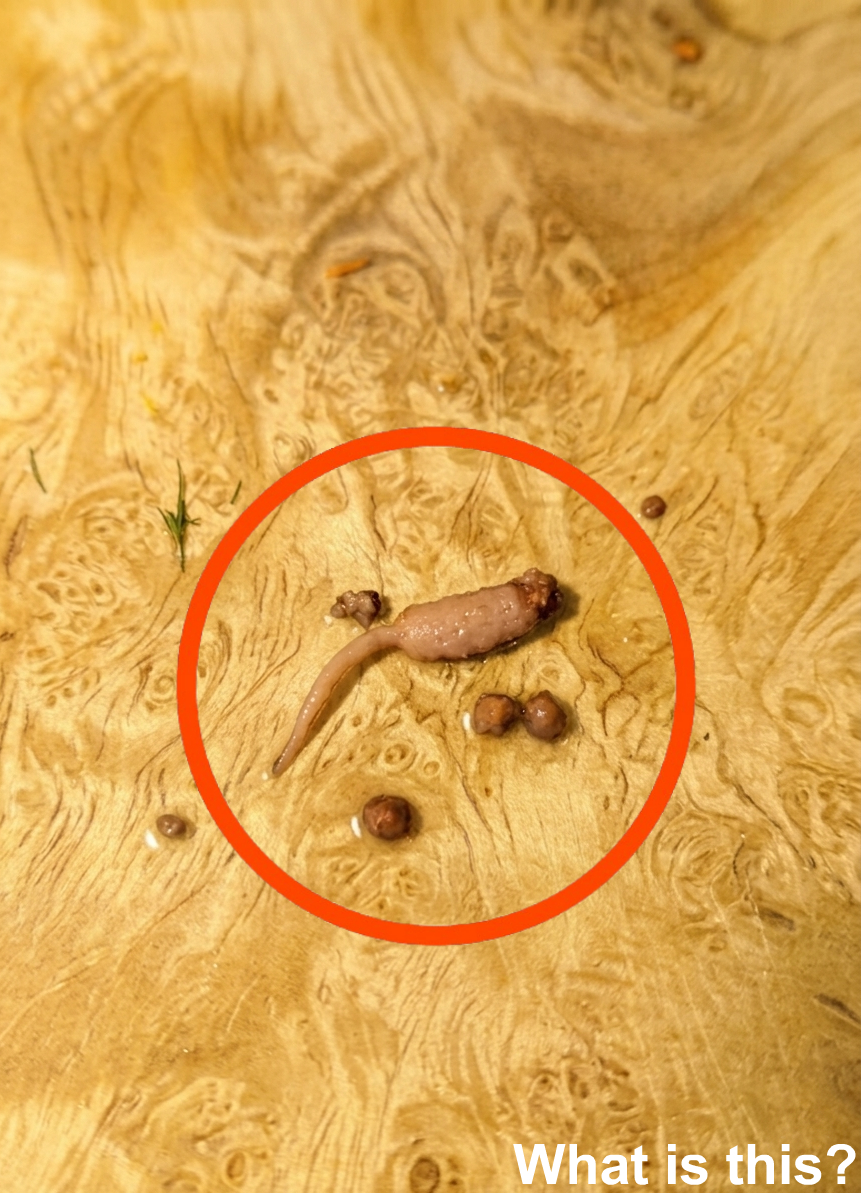
What started as a moment of shock quickly turned into curiosity, then research, and finally relief. At first glance, what appeared in the pan looked unsettling—thin, pale, and oddly string-like. It was enough to make anyone pause mid-meal. But after taking a closer look, snapping a photo, and zooming in for detail, the explanation turned out to be far less alarming than the imagination initially suggested.
What had seemed strange and unfamiliar was, in reality, something far more ordinary: a piece of connective tissue—likely fat or tendon—that had changed shape during cooking. Once heat is applied, meat doesn’t behave in a perfectly uniform way. Ground beef, in particular, is made up of a mixture of muscle fibers, fat, and small connective tissues that don’t always cook evenly or predictably.
When exposed to high temperatures, these components can shrink, curl, or clump together. That process can sometimes create shapes that look unusual or even slightly disturbing to the untrained eye. In the moment, it’s easy for the mind to jump to conclusions, especially when the appearance doesn’t match what we expect food to look like.
However, food science offers a much simpler explanation. What was seen in the pan is not a parasite, foreign organism, or contamination of any kind. It is simply the natural behavior of animal tissue under heat. Fat can render and tighten, while connective fibers can contract and twist into thin, rope-like forms. These changes are completely normal during cooking and do not indicate any safety issue.
Keep reading…