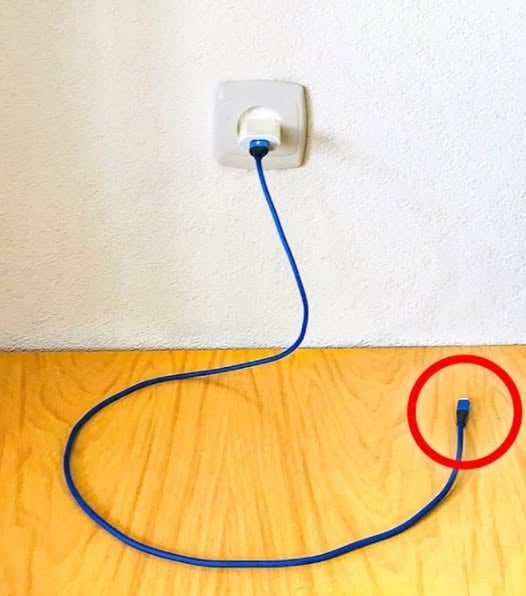
The small charger plugged into your wall often goes unnoticed, quietly sitting there like it’s harmless. But behind that ordinary appearance is a device constantly under stress, slowly aging even when you’re not actively using it. Over time, heat builds inside the adapter, materials wear down, and internal components lose their original stability. It doesn’t happen suddenly—it happens silently, in ways most people never think to check.
Even when a phone or device isn’t connected, many chargers continue drawing a minimal amount of power. That steady trickle may seem insignificant, but it contributes to gradual warming inside the unit. Inside that small plastic shell, delicate parts are balancing on the edge of their design limits. Insulation can become brittle with repeated heat cycles, and solder points—those tiny metal connections holding everything together—can weaken over months or years. When everything is working normally, nothing seems wrong. But electrical safety rarely fails all at once; it degrades step by step until one unexpected moment pushes it too far.
Power surges are another hidden factor. A sudden spike in electricity from the grid, lightning in the distance, or fluctuations in household demand can pass through aging adapters without warning. A charger that has already been weakened by time and heat may struggle to absorb that surge. In the worst cases, that stress can trigger overheating or internal failure, often happening when no one is in the room to notice the early signs.
The risk isn’t limited to the charger itself. The environment around it can amplify the danger. A loose plug that doesn’t fully sit in the socket can create tiny arcs of electricity, producing heat and sparks behind the wall plate. Dust accumulation near outlets or flammable materials nearby—curtains, paper, furniture—can turn a small electrical fault into something far more serious. These are everyday conditions in most homes, which is exactly why the risk is often overlooked.
Keep reading…