A Sudden Moment on the Road
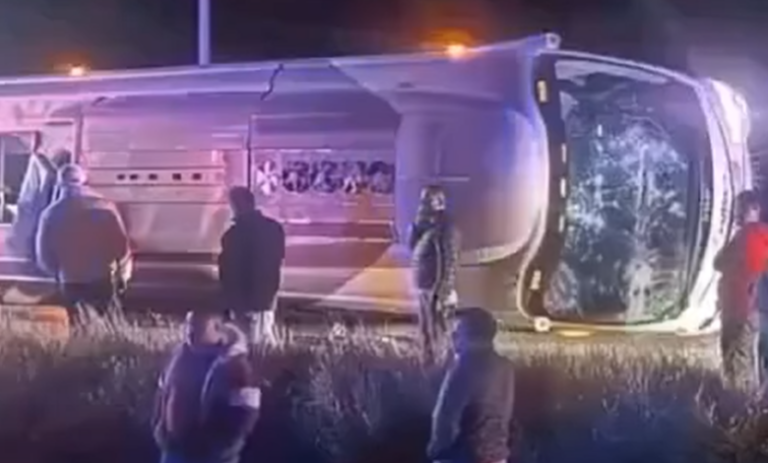
Road traffic incidents remain one of the most serious challenges in modern transportation systems worldwide. The image above captures a nighttime scene where a large passenger vehicle has overturned on a roadway, with emergency lights illuminating the area as responders and bystanders gather nearby.
While the photograph represents a single frozen moment, it reflects a much broader reality—how quickly everyday travel can shift into an emergency situation, and how critical response systems become in those moments.
What the Scene Shows
In the image, the vehicle is positioned on its side along what appears to be a roadside shoulder. Emergency lighting from first responders casts bright reflections across the area, signaling active assistance and scene management.
Nearby individuals can be seen observing or assisting at a distance, while emergency teams focus on securing the site. Although the exact cause of the incident is not shown, the scene clearly highlights a coordinated response effort aimed at ensuring safety and stability.
Situations like this often require rapid action to manage traffic, assess conditions, and support anyone involved.
How Road Incidents Like This Occur
Vehicle rollovers involving large passenger transport can result from a combination of factors rather than a single cause. Common contributing elements may include:
- Sudden steering adjustments or evasive maneuvers
- Road surface conditions such as wet or uneven pavement
- Mechanical issues, including tire or steering complications
- Driver fatigue during long or nighttime travel
- Reduced visibility and challenging weather conditions
Each incident is unique, and official investigations are necessary to determine the exact circumstances.
The Critical Role of Emergency Responders
One of the most important aspects visible in the scene is the presence of emergency personnel. Their role in such situations typically includes:
- Securing the area to prevent further risk
- Assisting passengers and checking for injuries
- Managing traffic flow around the incident
- Coordinating recovery and transport operations
- Documenting the scene for official review
Their work is often carried out under challenging conditions, especially at night when visibility is limited and response urgency is high.
Keep reading…