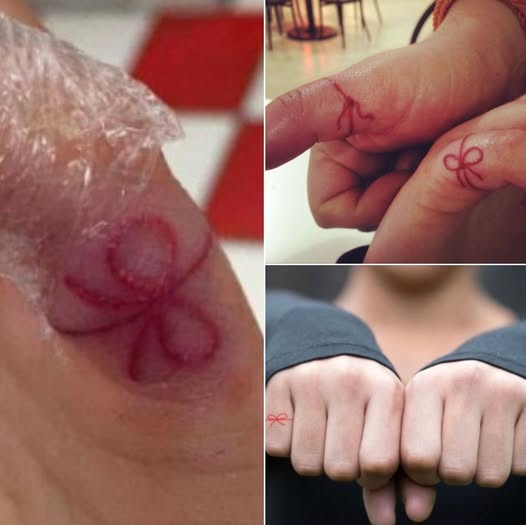
Body art has always been one of the most personal ways people express who they are. Across cultures and generations, tattoos and body markings have carried stories, beliefs, memories, and identity. What may look like a simple design to one person can hold deep emotional or cultural meaning for another.
In today’s world, tattoos are more visible than ever. Some are chosen on a whim, while others are carefully selected to represent something meaningful—such as love, heritage, personal growth, or belief systems. Among the many designs that appear repeatedly across different people, one small but striking symbol continues to draw attention: a red string-like tattoo.
A Simple Design That Sparks Curiosity
At first glance, the red string tattoo appears minimal—often a tiny knot, bow, or thread wrapped around a finger or wrist. Its simplicity is part of what makes it so noticeable. Despite its subtle appearance, many people recognize it instantly and wonder what it stands for.
This design is commonly linked to the idea of the “red string of fate,” a symbolic concept that has become popular worldwide. While it looks like a small decorative marking, its meaning goes far deeper than its size suggests.
The Story Behind the Red String of Fate
The red string of fate originates from East Asian folklore, especially traditional Chinese storytelling, later adopted and adapted in Japanese culture as well. The concept describes an invisible red thread that connects two people who are destined to meet.
According to the legend, no matter how far apart those individuals may be—or how many obstacles stand in their way—the thread never breaks. Over time, it eventually brings them together.
This idea has been passed down through generations and continues to influence modern interpretations of love, destiny, and human connection.
What the Tattoo Symbolizes Today
Keep reading…