Noticed a Dark Spot on Your Child’s Foot?
Here’s What Parents Should Know
Blood Blisters in Children: What Parents Should Know and How to Help
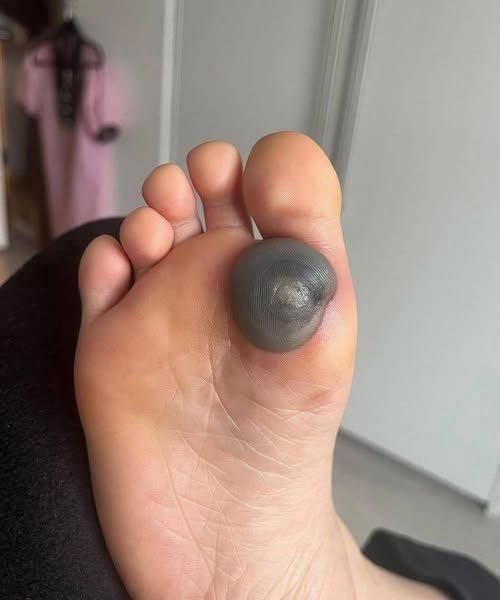
A dark, swollen blister on a child’s toe or finger can look alarming, especially when it appears suddenly. Its deep red, purple, or almost black color may resemble a serious bruise, but it could be a blood blister. These form when small blood vessels break beneath the skin, allowing blood to collect in a raised pocket while the outer layer remains intact.
Although many blood blisters heal without complications, parents should know how to protect the affected area and recognize signs that need medical attention.
What Causes a Blood Blister?
Blood blisters often develop after pressure, pinching, friction, or a minor injury. A child wearing shoes that are too tight, catching a finger in a door, or dropping a heavy object on a toe may damage tiny blood vessels beneath the skin.
The trapped blood gives the blister its distinctive dark appearance. The area may feel tender, swollen, or uncomfortable when touched. Its size and color can vary depending on the injury and how much blood has collected.
Most minor blood blisters gradually improve as the body reabsorbs the trapped blood and the skin repairs itself. However, not every dark or raised skin mark is necessarily a blood blister, so the circumstances surrounding its appearance matter.
Why You Should Avoid Popping It
It may be tempting to drain a large blister, particularly if it looks uncomfortable. However, puncturing it at home can expose the underlying skin to bacteria and increase the risk of infection.
 Up Next: Page 2 of 2
The outer layer acts as a natural protective covering while healing takes...
Instead, gently clean the surrounding area, avoid unnecessary friction, and protect the blister with a loose, clean dressing if clothing or footwear...
Continue Reading