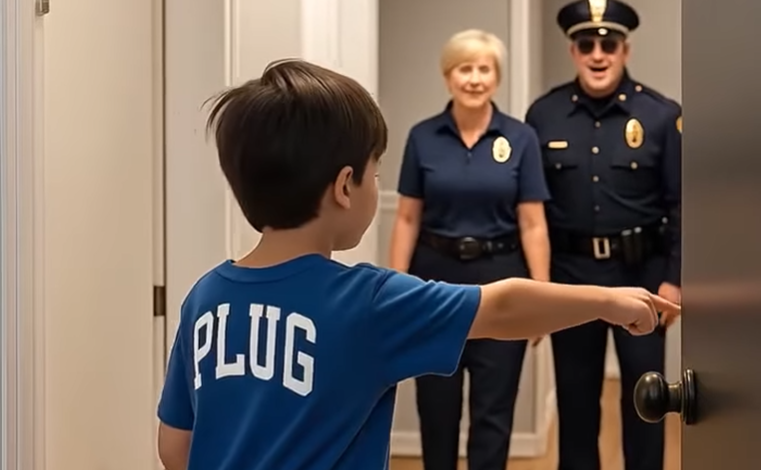
The 911 dispatch center was buzzing with routine calls until one came through that froze the room. A voice—so small, so fragile it could have been mistaken for static—breathed into the receiver: “My mommy and daddy are in the room, and a man is hurting them.” Before the dispatcher could respond, a low, menacing male voice cut through the background, followed by the chilling click of a phone line going dead. Silence fell, heavy with dread.
Minutes later, two patrol officers arrived at a quiet suburban home that, from the outside, seemed like the perfect picture of calm: blooming flowers, a manicured lawn, and a bright yellow door that promised warmth. But as they approached, the illusion shattered. The door swung open—not by an intruder, but by a small boy named Leo, just seven years old. He didn’t cry or flinch; he pointed silently toward a half-open bedroom door, his expression carrying a weight far beyond his years.
Inside, the nightmare unfolded: Leo’s parents lay bound and gagged, terror etched on their faces, while a hooded man gripped a kitchen knife, his trembling hands betraying desperation. From the safety of the hallway, Leo watched, fists clenched, heart racing, but mind steady. He had already done the most critical thing: using his father’s discarded cell phone, he had called for help.
The officers moved quickly but with careful precision, speaking in low, firm tones that slowly broke the intruder’s resolve. The knife clattered to the hardwood floor, handcuffs clicked, and the threat was neutralized.
Continue reading on next page…