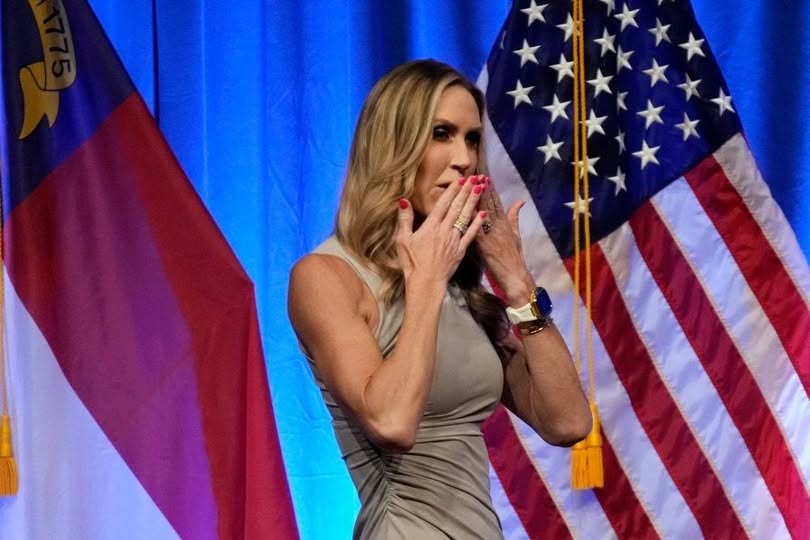
Lara Trump’s quiet confirmation as co-chair of the Republican National Committee might have lacked fanfare, but the implications are anything but subtle. In a nondescript meeting room in North Carolina, the final step was taken in what amounts to a structural fusion between one family and the party apparatus. This wasn’t just a routine leadership vote—it was a consolidation of power that reshapes the GOP from the ground up.
By placing Lara Trump at the top of the RNC hierarchy, Donald Trump has ensured that fundraising, messaging, staffing, and grassroots strategy flow through someone he trusts implicitly. Control is no longer ideological or rhetorical; it is procedural. Decisions, priorities, and influence are now tightly aligned with the Trump orbit. For loyalists, this move was overdue. After years of internal resistance, the party’s machinery now mirrors the reality that Trump dominates the base, defines the media narrative, and drives national priorities.
Supporters argue this alignment eliminates friction: no more internal sabotage, no hedging against the base, no mixed signals. Heading into a high-stakes election cycle, a clear, unified structure could mean discipline, loyalty, and relentless messaging at every level.
But not everyone in the GOP sees it that way. For longtime operatives and elected officials, Lara Trump’s elevation signals a tipping point. What was once a party with competing factions now looks like a centralized operation revolving around a single surname. The line between party and personality has blurred—and that has long-term consequences. The RNC controls the purse strings, decides which candidates get funding, and prioritizes messaging in battleground states. With Lara Trump in charge, loyalty to Trump is no longer optional—it is structurally incentivized.
Continue reading on next page…