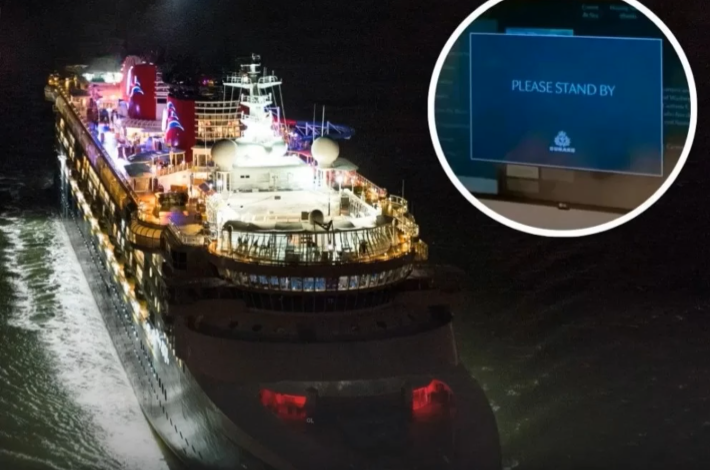
A world cruise is usually sold as the ultimate escape—endless horizons, polished luxury, and the quiet confidence of a floating five-star hotel. That was the promise aboard Cunard’s Queen Anne, which had just launched its inaugural 111-night world voyage, a journey designed to showcase elegance, tradition, and adventure on a global scale.
But one night, deep in Southeast Asian waters, that dreamlike atmosphere changed in an instant.
As the ship crossed the Sulu-Celebes Sea, a strategic stretch of ocean between the Philippines, Malaysia, and Indonesia, passengers were jolted by an unexpected announcement from the bridge. The captain instructed everyone to turn off cabin lights, close blackout curtains, and immediately clear all outdoor decks. Non-essential lighting across the vessel was shut down. Public spaces dimmed. Balconies went dark.
The Queen Anne—normally glowing against the night sea—was deliberately transformed into a shadow.
The reason was startling: piracy risk.
While piracy is often thought of as a relic of the past, the captain explained that this region remains one of the few places where modern maritime crime still exists, including armed robberies and kidnapping attempts. The precautionary blackout was designed to reduce the ship’s visibility, making it harder to detect from smaller vessels operating near remote islands.
For passengers, the shift was surreal. Moments earlier, guests were enjoying champagne, live music, and ocean views. Suddenly, they were sitting quietly inside darkened cabins, advised to stay away from windows. The contrast between high-end comfort and real-world danger was impossible to ignore.
Continue reading on next page…