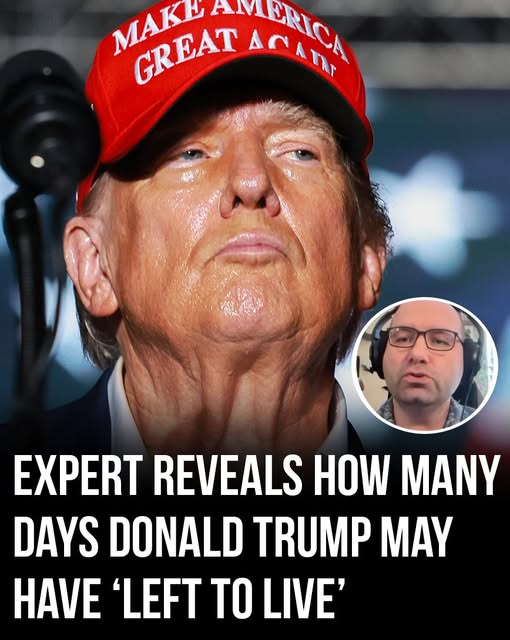
Public curiosity about the health of national leaders is nothing new, particularly when those leaders are older, highly visible, and constantly observed on the global stage. Questions about stamina, mental sharpness, and physical well-being tend to surface during long tenures in office, regardless of political affiliation.
These conversations are not exclusive to any single individual. They often intensify after major public appearances or when audiences perceive changes over time, whether real or imagined.
In recent weeks, renewed attention has turned toward President Donald Trump, following his appearance at the World Economic Forum in Davos and several subsequent public engagements. Although the president and his medical team have stated that he remains in good health, some commentators and professionals have raised broader questions related to aging, communication style, and overall physical condition.
This article examines the wider context surrounding those discussions: what is publicly documented, how experts generally talk about aging and health, and why transparent reporting matters when it comes to national leadership.
Age and the Office of the Presidency
As of 2026, Donald Trump holds a notable historical distinction: he is the oldest individual to serve as President of the United States. Born on June 14, 1946, he was 70 years old at his first inauguration in 2017 and would be nearing 80 during his current term.
Historically, most U.S. presidents assumed office at younger ages. Still, age alone is not a reliable measure of capability. Many people well into their late 70s and beyond maintain strong cognitive function and physical health.
That said, advancing age is statistically associated with higher risks for cardiovascular issues, neurological changes, and chronic conditions—factors that naturally draw attention when the role involves sustained pressure and complex decision-making.
Former President Ronald Reagan, who left office at 77, is often cited in similar discussions, as are older leaders in other countries. In all cases, public interest tends to stem from the seriousness of the position rather than personal curiosity.
What Official Health Information Includes
In the United States, presidential health updates are typically provided through summaries issued by White House physicians after routine physical exams. These reports often cover:
- Vital signs such as blood pressure and heart rate
- Cardiac and laboratory test results
- Information on medications or lifestyle factors
- Physician assessments of overall health
- Occasionally, cognitive screening outcomes
Regarding President Trump, past disclosures have noted factors such as cholesterol levels, physical activity habits, and standard medication use. Importantly, none of the publicly released summaries to date indicate diagnoses of serious neurological disorders, including dementia.
It is also worth noting that detailed medical records are protected by privacy laws. The health summaries released are voluntary and curated, not legally required to be exhaustive.
Public Appearances and Heightened Scrutiny
During the January 2026 World Economic Forum in Davos, observers noted visible bruising on the president’s hands. The White House attributed these marks to a minor, accidental incident and described them as superficial.
Beyond visible injuries, public attention has increasingly focused on elements such as facial expression, speech rhythm, and movement—an issue not limited to Trump, but common for older public figures worldwide.
Such observations, particularly when made by non-medical viewers, are inherently subjective. Without clinical context, they often reflect perception rather than medical fact.
Expert Commentary and Its Limits
Following recent appearances, various commentators—including licensed health professionals—have shared general observations. In one widely circulated discussion, a licensed physical therapist spoke broadly about aging and neurological health based on publicly available footage.
However, several important distinctions apply:
- Diagnosis requires medical authority. Physical therapists are extensively trained in movement and rehabilitation, but diagnosing neurological conditions requires physician-led evaluation.
- Video footage is not diagnostic. Clinical assessments rely on medical history, standardized testing, imaging, and laboratory data—not isolated clips.
- Normal aging can mimic illness. Changes in gait, speech tempo, or reaction time can result from fatigue, stress, or environment rather than disease.
- Patterns over time matter. Clinicians look for consistent, measurable changes across multiple settings, not singular public moments.
Because of these limitations, medical organizations consistently caution against drawing health conclusions from public behavior alone.
Neurological Conditions: General Information
Some discussions have referenced conditions such as frontotemporal dementia (FTD). FTD is a rare neurological disorder that affects behavior, language, and personality, but several facts are often overlooked:
- It requires formal diagnosis by specialists.
- Its progression varies widely among individuals.
- Public appearances cannot confirm or exclude its presence.
Health professionals broadly agree that speculating about specific diagnoses without direct clinical evidence risks misleading the public.
Why Leader Health Remains a Public Issue
Interest in the health of national leaders persists for several reasons:
- Leadership roles demand sustained mental and physical capacity.
- Transparency can strengthen public trust, particularly with older leaders.
- Social expectations are evolving as people live longer and remain active later in life.
- Historical comparisons shape how behavior is interpreted.
At the same time, experts stress the importance of balancing public interest with respect for privacy and dignity.
What Medicine Actually Says About Aging
When clinicians discuss aging and cognitive health in general terms, several well-established principles apply:
- Aging varies widely between individuals.
- Normal aging is not the same as dementia.
- Cognitive screening involves structured clinical tools.
- Long-term health conditions can influence brain function.
- Clear, regular health summaries offer better insight than media speculation.
These principles inform population-level understanding but do not support diagnosing individuals from afar.
Media, Social Platforms, and Public Interpretation
In today’s media environment, short clips and commentary can spread rapidly. This creates both opportunity and risk:
- It promotes engagement with health and science topics.
- It can blur boundaries between evidence, opinion, and speculation.
Responsible discussion distinguishes clearly between observation, verified disclosure, established science, and personal interpretation.
A Global Perspective on Aging Leaders
The United States is not alone in grappling with questions about age and leadership. Around the world, many heads of government serve well into their 70s and 80s.
These examples demonstrate that age alone does not determine effectiveness. Functional capacity—and honest reporting—matter far more.
Why Accurate Health Reporting Is Essential
The most constructive approach includes:
- Regular medical evaluations by qualified physicians
- Clear public summaries of relevant findings
- Careful distinction between normal aging and illness
- Professional restraint in public commentary
This balance protects privacy while addressing legitimate public concerns.
Final Thoughts
Public interest in a leader’s health is understandable, especially when age and visibility intersect. What is not justified is drawing medical conclusions without clinical evidence.
A healthy public conversation rests on verified facts, medical context, and responsible interpretation. When those elements are present, discussions about age and leadership can remain informative, respectful, and grounded in reality.