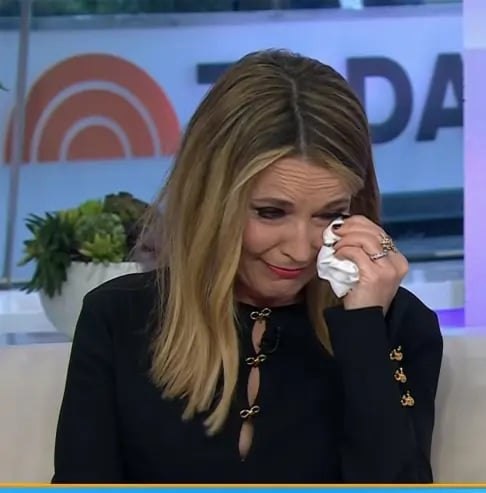
Breaking news can hit hard, especially when it involves someone familiar. Recently, public attention has focused on Savannah Guthrie amid the unresolved disappearance of her mother, Nancy Guthrie, in Tucson. What has emerged so far is less about answers and more about questions.
Authorities intensified concern after a welfare check at Nancy’s home revealed irregularities: possible blood traces on the front steps, a damaged security camera, and signs that the property had been disturbed. Yet officials have been careful, stopping short of confirming a crime. Details remain murky—whose blood it was, whether it was human, how the security system failed—nothing is confirmed. There’s no timeline, no suspects, and no official explanation. The case exists in a tense limbo, visible enough to alarm, but incomplete enough to resist interpretation.
For Savannah, a journalist trained to separate fact from speculation, the experience is deeply personal. Professional instincts offer little comfort when waiting replaces answers, and familiar routines turn threatening under the weight of uncertainty. Meanwhile, the public and social media swirl with theories and assumptions, often spreading faster than verified facts—adding stress for families navigating such crises.
Continue reading on next page…