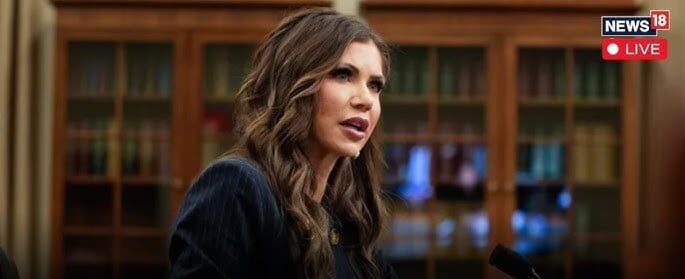
In today’s political climate, twenty minutes can feel like an eternity. That window is long enough for headlines to dominate feeds, narratives to solidify, and public opinion to start forming—often before all the facts are in. Tonight, Kristi Noem’s confirmation became exactly that kind of flashpoint: fast, polarizing, and revealing.
This confirmation was anything but spontaneous. Behind closed doors, it had been meticulously reviewed, debated, and timed for maximum impact. By the time the public learned of it, the announcement was already engineered to dominate the news cycle within minutes. The result? Instant, intense reactions from both supporters and critics—each interpreting the moment through their own lens.
Supporters were immediate and disciplined. For them, this confirmation signals inevitability—a reward for loyalty, competence, or political calculation. Statements flooded in praising experience, leadership, and readiness, carefully curated to project stability amid growing scrutiny. The messaging was precise: this is a moment of preparation, not chaos.
Opponents reacted just as quickly, but with a focus on process and accountability. They demanded evidence, timelines, and clarity, scrutinizing the decision-making framework rather than the figurehead. In doing so, they underscored a growing divide in political discourse: narrative versus verification, perception versus proof.
Caught in between, the public watched with a mix of impatience and curiosity. Screens were refreshed, fragments of information dissected, and speculation spread faster than the facts themselves. In today’s fast-moving media environment, silence is not neutral—it is provocative. Delay invites interpretation, and every unanswered question becomes fodder for conjecture.
Continue reading on next page…