A barn is never completely quiet. Even in its calmest moments, there’s always sound—the soft rustle of straw settling, the slow, steady breathing of a large animal, the dull tap of metal against wood. But when I stepped into the stable after a week away for work, the stillness felt wrong. It wasn’t peaceful. It was hollow, empty, and deeply unsettling.
Spirit’s stall was open, the gate hanging loose as if it had been left that way for days. His feed bucket sat untouched, bone dry. The comforting mix of cedar shavings and warm horsehair was gone, replaced by stale dust. Worst of all, his halter—the one with the brass nameplate I polished every spring—was missing from its hook.
“Spirit?” I called out, even though I knew better. My voice cracked anyway. I walked the fence line, boots sinking into soft ground, searching for broken boards or tracks leading away. There were none. Spirit was twenty years old, slow in the joints, gentle to his core. He didn’t bolt. He didn’t wander. He was my constant—the animal that carried me through my mother’s death and every hard chapter that followed.
Panic tightened my chest as I went inside. Sky was in the kitchen, calmly spreading butter on toast. He didn’t react when the door slammed.
“Where is Spirit?” I asked.
“I sold him,” Sky replied, without looking up. “Last week. He was old, expensive, and unnecessary. This was the logical choice.”
My stomach dropped. “You sold my horse? Without telling me?”
He shrugged, finally meeting my eyes. “He was a sentimental attachment, Willa. You’re grown. I got a decent price and put the money to better use. You’ll see that eventually.”
I didn’t yell. I couldn’t. I walked out before my anger turned dangerous. That night, I sat in the guest room, laptop glowing blue in the dark, contacting rescues, stables, auction listings—anything within driving distance. Most never responded. One woman from a small operation near Elk River did. She said older horses often changed hands quickly through private deals, avoiding official channels.
The next morning, I stood outside with my phone when I heard Sky laughing through the open window. It was warm and familiar in a way I hadn’t heard in months.
“You won’t believe it,” he said into the phone. “Selling that horse paid for everything. This weekend is going to be incredible.”
Something inside me went cold. This wasn’t about money or practicality. He had sold Spirit to impress someone else—treated my past like spare change.
After Sky left for work, I opened his locked desk drawer. The key was taped underneath. Inside was the bill of sale. It led me to a woman who admitted she’d taken Spirit briefly before passing him on. “He wouldn’t move,” she said. “Just stood by the fence. I sent him to a rescue—Windermere.”
I drove there immediately. Spirit stood beneath a lean-to, his coat dull, burrs tangled in his tail. He looked worn down. Older. But when I said his name, his ears flicked. He lifted his head and released a low, broken whinny that nearly dropped me to my knees.
“He barely eats,” the rescue owner said quietly. “Just waits.”
“For me,” I whispered, pressing my forehead to his nose.
I paid the fees, signed the papers, and hauled him to a private boarding stable miles away—somewhere Sky would never think to look. Then I made another call. Not to my husband. To his mother.
Allison Davis believed in legacy, reputation, and consequences. When I told her everything—Spirit, the affair, the money—the silence stretched.
“Sunday dinner,” she finally said. “Be early.”
That Sunday, Sky sat smug at the table, beer in hand, completely unaware. I waited until the dishes were cleared.
“Sky,” I said calmly, “why don’t you tell everyone about your recent sale?”
He froze. “What?”
“Tell them about Spirit. About the woman you called ‘sweetheart.’ About how my horse paid for her weekend.”
His face drained of color. His father leaned forward. “You sold Willa’s horse?”
“It was just an animal,” Sky muttered. “I needed the money.”
“It was her life,” Allison snapped, standing. “You will repay every dollar today. Then you will leave.”
Sky looked around the table and finally understood—he had lost everything. The drive home was wordless. The next morning, a locksmith came. When Sky returned, his bags were waiting outside.
“You can keep the car,” I said through the door. “But you’re done here.”
He left without another word.
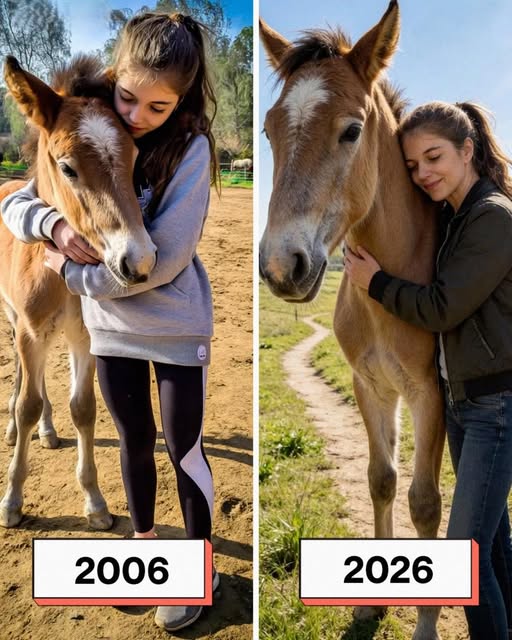
That afternoon, I stood at the fence watching Spirit graze, the barn quiet in the right way again. I rested my hand on his forehead, right over the white star. He leaned into me, solid and warm.
People like Sky confuse kindness with weakness. They don’t understand that taking someone’s history doesn’t break them—it sharpens them.
“You’re safe now,” I whispered. “And the gate stays closed.”