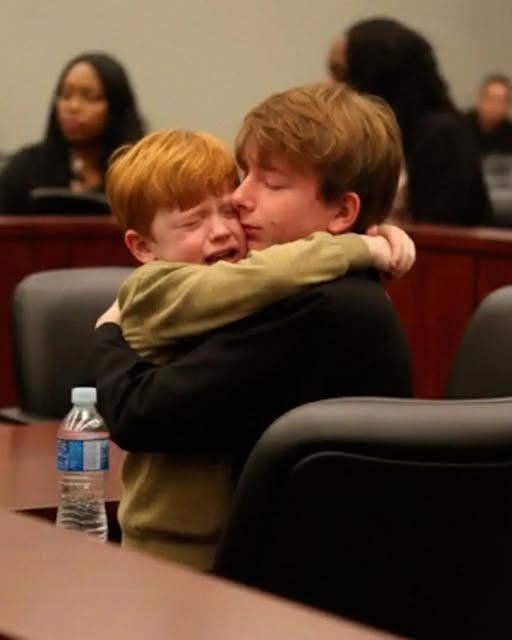
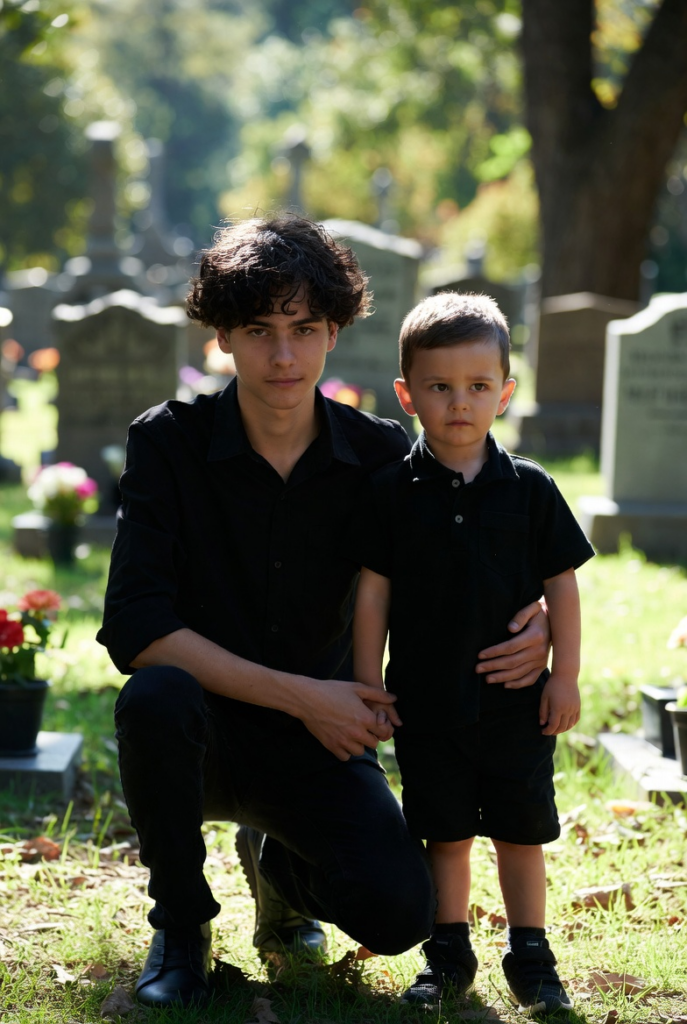
Turning eighteen is supposed to feel like freedom, like stepping into adulthood with a sense of possibility. Mine was nothing like that. I spent my birthday in a cemetery, dressed in black, burying both of my parents. The weight of grief hit me like a tidal wave, but the heaviest burden wasn’t the loss—it was the terrified little hand gripping mine. My six-year-old brother, Max, didn’t understand what had happened. He kept looking toward the cemetery gates as if Mom would suddenly appear.
I knelt down and promised him something that would define the next chapter of my life: I would never let anyone take him. I was barely an adult myself, but I became his world in that moment.
I didn’t have to wait long to see who would try to exploit our loss. A week later, my Aunt Diane and Uncle Gary invited us to their home. Their kitchen gleamed with marble countertops and polished chrome, smelling faintly of luxury candles. Diane handed me a mug of cocoa with a smile so practiced it felt like armor.
“You’re just a kid,” she said softly, her voice almost syrupy. “You have no job, no degree, and no way to provide Max with the routine and guidance he needs.”
Gary echoed her words like a rehearsed duet. “A real home is important for a child.”
The hypocrisy was staggering. These were the same people who had skipped Max’s birthdays for years, who chose cruises and galas over family. Their interest wasn’t love—it was strategy. The next morning, they filed for custody, and I realized: I wasn’t just a brother anymore. I was a fighter.
A week after the funeral, the real fight for Max began…