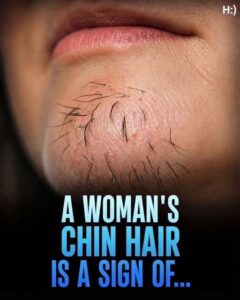
A few isolated chin hairs do not necessarily indicate a hormonal problem. Gradual changes can occur naturally with age, although the timing and extent vary from person to person.
If facial hair develops alongside other unexplained changes, a healthcare professional can help determine whether hormonal testing or further assessment is appropriate.
3. Chin Hair Can Sometimes Be Associated With PCOS
Polycystic ovary syndrome (PCOS) is a hormonal condition that can affect ovulation and androgen levels. One possible symptom is hirsutism, which refers to excessive growth of coarse hair in areas where androgen-sensitive hair commonly develops, including the chin, upper lip, chest, and abdomen.
Other features associated with PCOS may include irregular menstrual periods, persistent acne, or difficulties with ovulation. Symptoms vary, and not everyone with PCOS experiences the same combination.
Having chin hair alone does not mean you have PCOS. Diagnosis depends on a broader assessment of symptoms, medical history, and, when appropriate, examination and testing.
4. Certain Medications May Contribute to Hair Growth
Some medications can affect hair growth or influence hormone-related processes. If you notice a significant change after starting a new medicine or changing a dose, mention it to your prescribing healthcare professional.
Do not stop or alter a prescribed medication on your own. A clinician can review possible side effects and discuss whether an alternative approach is appropriate.
5. When Should You Seek Medical Advice?
A few occasional chin hairs are generally not a cause for concern. However, it is sensible to seek medical advice if facial hair becomes noticeably thicker or increases quickly, particularly if the change is accompanied by other symptoms.
 Up Next: Page 3 of 3
Consider arranging an assessment if you experience:
Rapid hair growth accompanied by a deeper voice, increased muscularity, or other marked changes should be assessed promptly. These symptoms do not...
Continue Reading