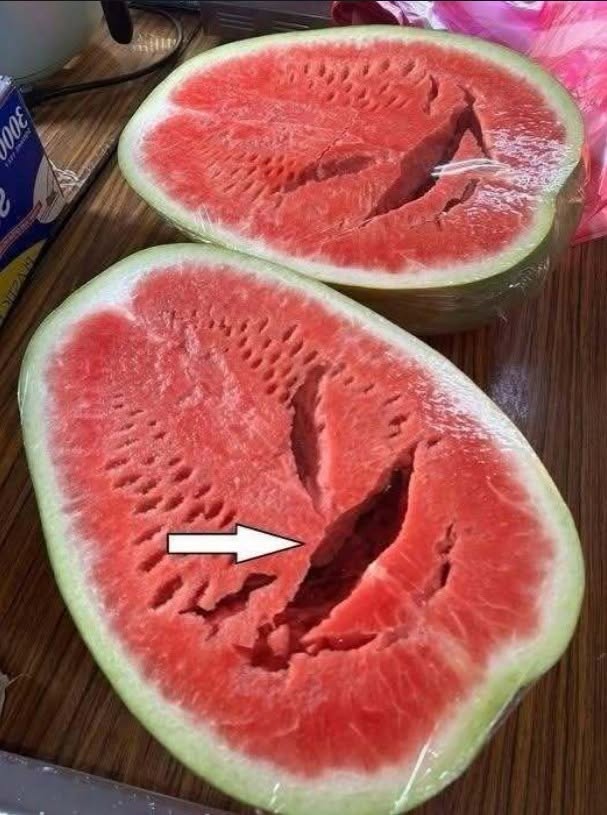
Cracks Inside a Watermelon: What Do They Mean, and Is It Safe to Eat?
Finding cracks or unusual spaces inside a freshly cut watermelon can be surprising. Some online posts suggest these changes indicate chemical contamination, but internal cracking does not automatically mean a watermelon is unsafe to eat. The fruit’s appearance, smell, texture, storage conditions, and handling all help determine whether it should be consumed.
Understanding the possible causes of these changes can help consumers make informed decisions without unnecessary concern.
Why Do Watermelons Develop Internal Cracks?
Internal cracks, hollow spaces, or uneven textures can develop for several reasons. Growing conditions, irregular water availability, rapid fruit development, and natural variations in the fruit may contribute to these defects. Physical damage during harvesting or transportation can also affect its quality.
Some watermelons may develop hollow areas inside, a condition commonly known as hollow heart. This is a physiological defect that can occur during fruit development. Although it may affect the appearance and texture of the flesh, it does not automatically indicate contamination or spoilage.
However, the appearance of a watermelon alone cannot confirm that it is safe to eat. Other signs and the way the fruit has been stored should also be considered.
Do Internal Cracks Mean a Watermelon Contains Chemicals?
Claims linking cracked watermelons directly to chemical contamination should be treated cautiously. An internal crack is not reliable evidence that a growth regulator or another chemical has been used.
Chlorfenuron is a plant growth regulator that has been used in some agricultural settings to influence fruit development. Its approval and permitted uses vary by jurisdiction. However, there is no sound basis for concluding that a watermelon contains chlorfenuron simply because its flesh has cracks or hollow spaces.
 Up Next: Page 2 of 3
Consumers concerned about pesticide residues can consult food-safety information from their local...
Before cutting a watermelon, look for a firm rind without extensive damage, deep cuts, or areas that appear rotten. A watermelon that...
Continue Reading