 Curious & Viral
Does Your $20 Bill Have an Unusual Mark?
Here’s What Collectors Look For
Most people look at a $20 bill and see exactly what it is: twenty dollars.
But collectors sometimes look much more closely.
Small differences in printing, unusual serial numbers, or genuine production errors can make certain U.S. banknotes more interesting to collectors. However, not every strange-looking mark means a bill is rare or valuable.
Why Some $20 Bills Get Attention
Modern U.S. currency is produced in enormous quantities, and the printing process involves multiple stages.
Occasionally, genuine production errors can occur. These may include significant misalignments, missing or misplaced printing elements, unusual ink problems, or other abnormalities that can be verified as part of the manufacturing process.
Minor smudges, folds, stains, or marks caused after a bill leaves the printing facility generally aren't considered valuable printing errors.
That's an important distinction for anyone hoping to identify a collectible note.
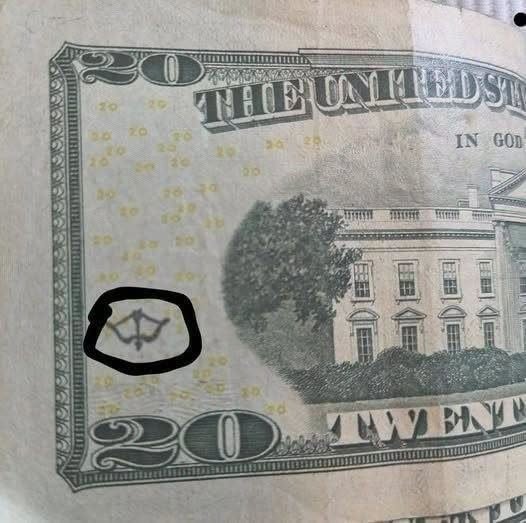
What About a Strange Mark Near the White House?
Some $20 bills may appear to have unusual shapes, marks, or details around the artwork featuring the White House.
Before assuming that such a feature is an error, it's worth comparing the bill with another $20 note from the same series.
A detail that looks unusual at first may actually be a normal part of the design, a security feature, or simply the result of the way the artwork appears under different lighting or magnification.
A particular mark by itself does not automatically make a $20 bill rare.
What Collectors Usually Examine
If you discover a $20 bill that looks unusual, there are several details worth checking.
1. The Serial Number
Collectors may pay attention to unusual serial-number patterns, including certain repeating or otherwise distinctive sequences.
However, desirability varies considerably depending on the specific pattern and the collector market.
 Up Next: Page 2 of 2
2. Printing Errors
A genuine printing error can sometimes increase a banknote's collector interest.
Continue Reading