I Cracked an Egg and Found a Strange White String Inside—Here’s What It Really Means
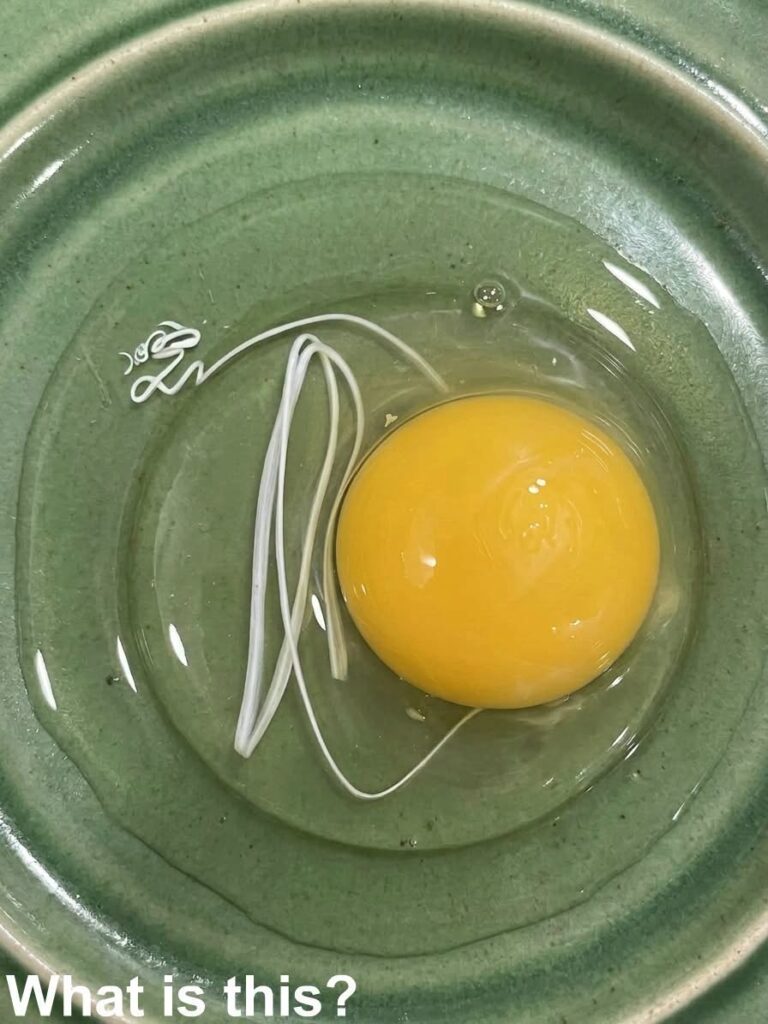
Have you ever cracked an egg into a frying pan and noticed a thin, white strand attached to the yolk? At first glance, it might look unusual enough to make you question whether the egg is safe to eat.
That was exactly what happened one morning when I decided to make fried eggs for breakfast. As the egg slid into the pan, I noticed a pale, twisted strand floating in the egg white. I paused, wondering whether it was something unusual or a sign that the egg had gone bad.
Before throwing the egg away, I decided to find out what the strange white strand actually was. The answer turned out to be much less alarming than I had imagined.
What Is the White String Inside an Egg?
The white, rope-like strand is called the chalaza. It is a natural part of an egg that helps keep the yolk positioned within the egg white.
Eggs have several structures that work together to protect and support the developing contents. The chalaza consists mainly of twisted strands of protein that help stabilize the yolk.
Although it may resemble a tiny string or thread, it is not a worm or parasite. Its appearance is a normal feature of many fresh eggs.
Does a Visible Chalaza Mean an Egg Is Fresh?
A clearly visible chalaza can be associated with a fresh egg, and it may become less noticeable as an egg ages. However, its appearance alone cannot establish an egg's freshness or safety.
Other factors, including storage conditions, handling, and the condition of the shell, are important when deciding whether an egg should be used.
If you notice a white strand inside an otherwise normal egg, there is generally no reason to panic. The strand itself is a natural part of the egg rather than an indication that something is wrong.
Is It Safe to Eat an Egg With a White String?
The chalaza is edible and does not need to be removed before cooking. Some people prefer to take it out for aesthetic reasons, particularly when preparing recipes that require a very smooth egg mixture, but doing so is optional.
 Up Next: Page 2 of 2
However, identifying the chalaza does not automatically mean the entire egg is...
For safer preparation, choose eggs with clean, uncracked shells, store them according to local food safety guidance, and cook them thoroughly. If...
Continue Reading