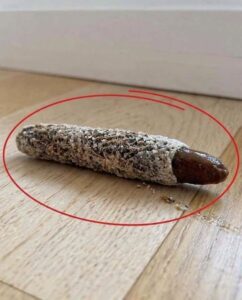
Their larvae can feed on materials such as spiderwebs, hair, and certain natural fibers. Some related case-bearing moth larvae can also affect wool and other animal-based fabrics.
Finding one case does not automatically mean there is a serious infestation.
However, noticing several cases repeatedly may be a reason to inspect quiet areas, clean accumulated dust and webs, and check natural-fiber items for signs of damage.
Is It Something to Worry About?
The discovery can be surprising, but there is usually no need to panic.
The main concern with household casebearers is their potential to become a nuisance or contribute to damage involving susceptible natural fibers, rather than posing a direct threat to people.
If you find an unfamiliar object, avoid assuming its identity from appearance alone. You can photograph it for identification or remove it during routine cleaning if appropriate.
If you repeatedly find similar cases or notice damage to clothing, rugs, or other fabrics, a qualified pest-control professional can help determine the cause.
A Small Reminder to Look More Closely
Most of us move through our homes without paying much attention to the tiny objects scattered along floors, tucked into corners, or hidden behind furniture.
Yet some of these objects have a surprisingly ordinary explanation.
What initially looks like a scrap of dust may turn out to be a protective shelter built by a small insect.
The discovery is a reminder that nature does not always exist far away in forests, gardens, or wild landscapes. Sometimes, its smallest examples are right beneath our feet.
The next time you spot a strange little object on the floor, take a closer look before deciding what it is. The explanation may be more interesting than you expect.
 Read Next Story →
I Found a Strange Little Tube on My Floor—What Could Be Hiding Inside?
More Stories You May Like
See More →


June has lived in the same farmhouse for 31 years and has seen every weird thing a house can do. She writes the "what is this thing and why is it in my house" beat from genuine curiosity, not a content calendar.
More from June →