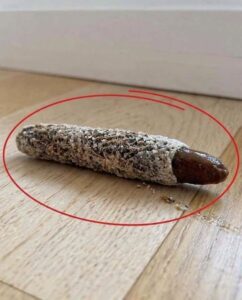
This is a useful example of how small insects adapt to their environments. Something that looks like a scrap of dirt to a person may serve as a shelter for a tiny living creature.
Where Might You Find These Cases?
If the object is a household casebearer case, it may turn up in places where dust, hair, fibers, and spider webs accumulate.
Common places to inspect include:
- Along baseboards and in floor corners
- Beneath beds, sofas, and other furniture
- In closets and storage areas
- Near curtains, carpets, and upholstered furniture
- Around undisturbed corners or old spider webs
Finding one case does not automatically mean that your home has a significant pest problem. However, discovering several similar objects over time is a reason to inspect the surrounding area more carefully.
Can These Insects Damage Clothing?
Some case-bearing moth larvae and related clothes moth species can damage natural animal-based materials, including wool, fur, feathers, and certain silk items.
The amount of damage depends on the species and its feeding habits. Not every small case found indoors belongs to a fabric-damaging insect, so identification matters.
If you discover repeated cases near clothing or carpets, look for additional clues such as small holes in wool garments, damaged fibers, shed skins, or further insect activity in dark storage spaces.
Avoid assuming that a single object means your clothes or furniture are infested. Look for a pattern of evidence before deciding how serious the problem might be.
What Should You Do If You Find One?
In many cases, basic cleaning is a sensible first step.
1. Remove the object. Use a tissue or vacuum cleaner to collect the case. If you use a vacuum, empty it appropriately afterward.
2. Clean nearby areas. Vacuum along baseboards, beneath furniture, and around corners where dust, hair, and fibers can collect.
3. Inspect natural-fiber items. Check wool clothing, rugs, blankets, and stored fabrics if you continue finding similar cases.
4. Reduce places where debris accumulates. Regularly remove dust and old spider webs from neglected corners and storage areas.
 Up Next: Page 3 of 3
5. Seek help if the problem persists. If you repeatedly find cases...
There is generally no reason to apply insecticides simply because you discover one unidentified object. Confirming what you are dealing with first...
Continue Reading